Gift or curse?
Nov. 20th, 2007 11:23 am![[personal profile]](https://www.dreamwidth.org/img/silk/identity/user.png) imomus
imomusAt this year's Venice Biennale, America was represented by Félix González-Torres. This was slightly odd, because González-Torres isn't exactly your average American contemporary artist. A gay man, born in Cuba, he died of AIDS eleven years ago. Homosexuality and Cuba are both thorny issues for America; the US continues to find it difficult to recognize gay unions or, for that matter, to recognize Cuba. "The fundamental goal of United States policy toward Cuba," says the US State Department website, "is to promote a peaceful transition to a stable, democratic form of government and respect for human rights". Which means, precisely, that Cuba's right to remain a communist state is not respected. Meanwhile, people continue to be detained at American camps on Cuba without recourse to lawyers or their families.

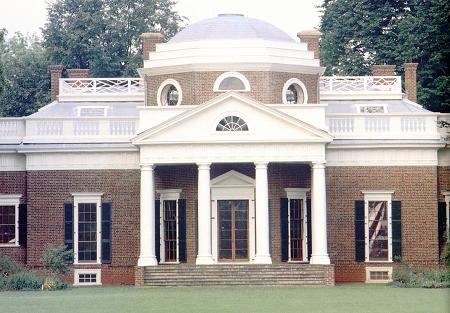
Considering these problematical issues, you can only applaud the boldness -- or hypocrisy -- of the choice of the late González-Torres to fill America's pavilion in the Giardini this year. The scaled-down replica of Monticello, Thomas Jefferson's Virginia slave ranch, greeted visitors with a notice inviting them to take a candy or a poster from the elegant, minimalist stacks in the galleries. The posters were blank sheets framed in black; tributes, perhaps, to González-Torres' dead lover. But in this context they became something else. Representing America, their meaning changed. They became presents, tokens of America's generosity, its material abundance. "I like to be in America, OK by me in America," as the West Side Story number goes (itself sung by Latino immigrants like González-Torres), "everything free in America (for a small fee in America)".

What exactly that "small fee" was quickly became apparent to anyone who rolled up a poster and tucked it under their arm. Hisae and I sucked the dark liquorice candy, but steered well clear of the posters. We'd already learned our lesson at a González-Torres show at the Hamburger Bahnhof in Berlin. We'd picked up posters, been burdened with them all day, then got them home, tried them on the walls, found them deeply depressing, and thrown them away. In the Giardini there were signs all around that people who'd taken the posters quickly realised that those two American values, material abundance and convenience, might actually be at odds. I became fascinated by the situation and started shooting pictures. The metaphor was just too pointed, too perfect.

The first signs that America's gift to the world wasn't universally appreciated came at the German pavilion. A big sign had been posted saying "No posters, baby-carriages, umbrellas, please". In the pavilions that did allow posters, there were awkward squeeze-past moments everywhere. It was as if the viral posters instantly made everyone who'd greedily, excitedly picked one up effectively obese. For the rest of the day, they'd be maneuvering through too-narrow doors, trying not to get their posters crushed or dirty, trying not to inconvenience other people, using two seats in the cafeteria instead of one, getting cold hands. It became apparent to many people that these big, blank sheets of paper simply weren't quite the gift they'd at first seemed. People began ditching them -- sometimes right on the floor of other pavilions. Here's one in the Russian pavilion, for instance. I wonder how Russian artist Alexander Ponomarev felt to have a poster from the American pavilion lying right at the foot of his work, in his own pavilion? Cultural imperialism this provocative needs to be resisted.

The next stage was anger and rejection. In bins all over the Giardini site, crushed in corners, ripped on the ground, trashed American posters could be seen. Some had even turned them into artworks, drawing faces on them, folding them into sculptures. Poor González-Torres! His poor boyfriend! Yet for some, this is exactly what he intended. An old friend of mine, a gay communist I knew at university, Shane Enright, wrote: "The greatest achievement of Gonzalez-Torres's art is its capacity, through mimicry, ambiguity, and paradox, to instill in his viewers an awareness of the power of their own subjectivity. This is a freedom of interpretation and a generosity that comes, however, with a reciprocal responsibility: for the visitor to choose the ultimate destination of a sheet from the stack." Well, Shane, I can tell you that the ultimate destination chosen by many was the rubbish bin.

Many, but not all. The intrepid soldiered on, carrying their free posters out into the streets of Venice, clinging to them -- and perhaps to the belief that they'd one day be worth something. Re-rolled, strapped to rucksacks whose size they doubled, these posters -- successful parasites, victorious viruses -- continued to collide with the unburdened all over the city. I was delighted to find some even on our flight back to Berlin, crammed by their loyal dupes, their poster-hosts, into the overhead lockers, radically depleting the space left for the rest of us, and inflicting paper cuts to our chins as we queued to leave the plane.

There they were again at baggage reclaim, and on Berlin public transport, the poster people! The ones who received America's generosity with gratitude, and were willing to endure hardships -- or inflict them! -- and sacrifice convenience -- theirs and others'! -- in order to celebrate the spirit of material abundance which led to such generosity!
Personally, though, I much preferred France's generosity. The brilliant Sophie Calle show took place in the Giardini's only adequately-heated pavilion. On a freezing day in November, that was a truly warm-hearted gift.
Considering these problematical issues, you can only applaud the boldness -- or hypocrisy -- of the choice of the late González-Torres to fill America's pavilion in the Giardini this year. The scaled-down replica of Monticello, Thomas Jefferson's Virginia slave ranch, greeted visitors with a notice inviting them to take a candy or a poster from the elegant, minimalist stacks in the galleries. The posters were blank sheets framed in black; tributes, perhaps, to González-Torres' dead lover. But in this context they became something else. Representing America, their meaning changed. They became presents, tokens of America's generosity, its material abundance. "I like to be in America, OK by me in America," as the West Side Story number goes (itself sung by Latino immigrants like González-Torres), "everything free in America (for a small fee in America)".
What exactly that "small fee" was quickly became apparent to anyone who rolled up a poster and tucked it under their arm. Hisae and I sucked the dark liquorice candy, but steered well clear of the posters. We'd already learned our lesson at a González-Torres show at the Hamburger Bahnhof in Berlin. We'd picked up posters, been burdened with them all day, then got them home, tried them on the walls, found them deeply depressing, and thrown them away. In the Giardini there were signs all around that people who'd taken the posters quickly realised that those two American values, material abundance and convenience, might actually be at odds. I became fascinated by the situation and started shooting pictures. The metaphor was just too pointed, too perfect.
The first signs that America's gift to the world wasn't universally appreciated came at the German pavilion. A big sign had been posted saying "No posters, baby-carriages, umbrellas, please". In the pavilions that did allow posters, there were awkward squeeze-past moments everywhere. It was as if the viral posters instantly made everyone who'd greedily, excitedly picked one up effectively obese. For the rest of the day, they'd be maneuvering through too-narrow doors, trying not to get their posters crushed or dirty, trying not to inconvenience other people, using two seats in the cafeteria instead of one, getting cold hands. It became apparent to many people that these big, blank sheets of paper simply weren't quite the gift they'd at first seemed. People began ditching them -- sometimes right on the floor of other pavilions. Here's one in the Russian pavilion, for instance. I wonder how Russian artist Alexander Ponomarev felt to have a poster from the American pavilion lying right at the foot of his work, in his own pavilion? Cultural imperialism this provocative needs to be resisted.
The next stage was anger and rejection. In bins all over the Giardini site, crushed in corners, ripped on the ground, trashed American posters could be seen. Some had even turned them into artworks, drawing faces on them, folding them into sculptures. Poor González-Torres! His poor boyfriend! Yet for some, this is exactly what he intended. An old friend of mine, a gay communist I knew at university, Shane Enright, wrote: "The greatest achievement of Gonzalez-Torres's art is its capacity, through mimicry, ambiguity, and paradox, to instill in his viewers an awareness of the power of their own subjectivity. This is a freedom of interpretation and a generosity that comes, however, with a reciprocal responsibility: for the visitor to choose the ultimate destination of a sheet from the stack." Well, Shane, I can tell you that the ultimate destination chosen by many was the rubbish bin.
Many, but not all. The intrepid soldiered on, carrying their free posters out into the streets of Venice, clinging to them -- and perhaps to the belief that they'd one day be worth something. Re-rolled, strapped to rucksacks whose size they doubled, these posters -- successful parasites, victorious viruses -- continued to collide with the unburdened all over the city. I was delighted to find some even on our flight back to Berlin, crammed by their loyal dupes, their poster-hosts, into the overhead lockers, radically depleting the space left for the rest of us, and inflicting paper cuts to our chins as we queued to leave the plane.
There they were again at baggage reclaim, and on Berlin public transport, the poster people! The ones who received America's generosity with gratitude, and were willing to endure hardships -- or inflict them! -- and sacrifice convenience -- theirs and others'! -- in order to celebrate the spirit of material abundance which led to such generosity!
Personally, though, I much preferred France's generosity. The brilliant Sophie Calle show took place in the Giardini's only adequately-heated pavilion. On a freezing day in November, that was a truly warm-hearted gift.
![[identity profile]](https://www.dreamwidth.org/img/silk/identity/openid.png)
Re: Felix Gonzalez-Torres
Date: 2008-06-02 07:58 pm (UTC)Re: Felix Gonzalez-Torres and Shane
Date: 2008-07-15 02:21 am (UTC)e e cumming's' "life is more true than reason did deceive" - (from 1 x 1, 1944, also in the Complete Poems, 2nd edn, p592) was a prefatory text and provided a chapter title ("- but beauty is more now than dying's when") to my 2006 Masters dissertation on Gonzalez-Torres which earned me a distinction and was shortlisted for the Society of Art Historians MA award.
Some passions, it seems, endure - but as for my memories of Aberdeen; they are hazy - my apologies for not recalling - though King Street, Caralampo and cummings were all a part... glad to have lent you the poetry, glad too it lingered in your memory.
Yes, I went on to the TGWU, and then a decade at the International Transport Workers' Federation working in 120 countries. Now I am the trade union campaign manager to Amnesty International in the UK, and Amnesty's global trade union adviser.
Some motives don't change....
But Felix's work - it's special - the haphazard destination of the work is precisely an intended condition of it's reception and I would agree entirely that this includes lazy acquisitiveness (please check out my earlier citation for a great account by Miwon Kwon of the 1994 Guggenheim retrospective which was incidentally also curated by Nancy Spector). I was in Venice for the show's opening and the preview days and the reaction was even more extreme than your description.
Imagine, nevertheless, those who took their pieces away, and treasured these - or the gallery-visiting kids and the art students who drew on or made origami figures from some of the plain coloured or bordered stacks? Or the unexpected reception of the double stack "somewhere better than this place"//"nowhere better than this place" piece - when I saw this at the opening of a retrospective in Berlin in 2007, fully a good inch's worth of the "nowhere better than this place" has been depleted compared to its companion - a vote, perhaps, of the local self-satisfaction with life...? Are we to judge the art by its audience..? This is complex stuff, which Gonzalez-Torres played with, with a seriousness which can perhaps be glibly ascribed to mortality and AIDS, but probably merits a more nuanced response - which gives the work some of its aimed-for autonomy, distinct from the biographical trappings which Gonzalez-Torres demurred from, and in turn make me loathe to be ascribed as a homosexual communist critic when neither of these attributions define my appreciation of the work...
There is a great piece on the biography and the art of Gonzalez-Torres by Carlos Basualdo in Julie Ault's magisterial editing of old and new writings published by Steidlgangin in 2006. It is also a visually stunning record.
Refresh my memory...