Gift or curse?
Nov. 20th, 2007 11:23 am![[personal profile]](https://www.dreamwidth.org/img/silk/identity/user.png) imomus
imomusAt this year's Venice Biennale, America was represented by Félix González-Torres. This was slightly odd, because González-Torres isn't exactly your average American contemporary artist. A gay man, born in Cuba, he died of AIDS eleven years ago. Homosexuality and Cuba are both thorny issues for America; the US continues to find it difficult to recognize gay unions or, for that matter, to recognize Cuba. "The fundamental goal of United States policy toward Cuba," says the US State Department website, "is to promote a peaceful transition to a stable, democratic form of government and respect for human rights". Which means, precisely, that Cuba's right to remain a communist state is not respected. Meanwhile, people continue to be detained at American camps on Cuba without recourse to lawyers or their families.

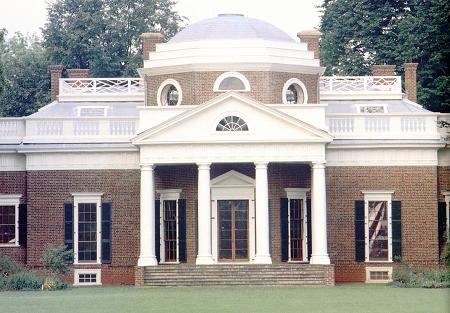
Considering these problematical issues, you can only applaud the boldness -- or hypocrisy -- of the choice of the late González-Torres to fill America's pavilion in the Giardini this year. The scaled-down replica of Monticello, Thomas Jefferson's Virginia slave ranch, greeted visitors with a notice inviting them to take a candy or a poster from the elegant, minimalist stacks in the galleries. The posters were blank sheets framed in black; tributes, perhaps, to González-Torres' dead lover. But in this context they became something else. Representing America, their meaning changed. They became presents, tokens of America's generosity, its material abundance. "I like to be in America, OK by me in America," as the West Side Story number goes (itself sung by Latino immigrants like González-Torres), "everything free in America (for a small fee in America)".

What exactly that "small fee" was quickly became apparent to anyone who rolled up a poster and tucked it under their arm. Hisae and I sucked the dark liquorice candy, but steered well clear of the posters. We'd already learned our lesson at a González-Torres show at the Hamburger Bahnhof in Berlin. We'd picked up posters, been burdened with them all day, then got them home, tried them on the walls, found them deeply depressing, and thrown them away. In the Giardini there were signs all around that people who'd taken the posters quickly realised that those two American values, material abundance and convenience, might actually be at odds. I became fascinated by the situation and started shooting pictures. The metaphor was just too pointed, too perfect.

The first signs that America's gift to the world wasn't universally appreciated came at the German pavilion. A big sign had been posted saying "No posters, baby-carriages, umbrellas, please". In the pavilions that did allow posters, there were awkward squeeze-past moments everywhere. It was as if the viral posters instantly made everyone who'd greedily, excitedly picked one up effectively obese. For the rest of the day, they'd be maneuvering through too-narrow doors, trying not to get their posters crushed or dirty, trying not to inconvenience other people, using two seats in the cafeteria instead of one, getting cold hands. It became apparent to many people that these big, blank sheets of paper simply weren't quite the gift they'd at first seemed. People began ditching them -- sometimes right on the floor of other pavilions. Here's one in the Russian pavilion, for instance. I wonder how Russian artist Alexander Ponomarev felt to have a poster from the American pavilion lying right at the foot of his work, in his own pavilion? Cultural imperialism this provocative needs to be resisted.

The next stage was anger and rejection. In bins all over the Giardini site, crushed in corners, ripped on the ground, trashed American posters could be seen. Some had even turned them into artworks, drawing faces on them, folding them into sculptures. Poor González-Torres! His poor boyfriend! Yet for some, this is exactly what he intended. An old friend of mine, a gay communist I knew at university, Shane Enright, wrote: "The greatest achievement of Gonzalez-Torres's art is its capacity, through mimicry, ambiguity, and paradox, to instill in his viewers an awareness of the power of their own subjectivity. This is a freedom of interpretation and a generosity that comes, however, with a reciprocal responsibility: for the visitor to choose the ultimate destination of a sheet from the stack." Well, Shane, I can tell you that the ultimate destination chosen by many was the rubbish bin.

Many, but not all. The intrepid soldiered on, carrying their free posters out into the streets of Venice, clinging to them -- and perhaps to the belief that they'd one day be worth something. Re-rolled, strapped to rucksacks whose size they doubled, these posters -- successful parasites, victorious viruses -- continued to collide with the unburdened all over the city. I was delighted to find some even on our flight back to Berlin, crammed by their loyal dupes, their poster-hosts, into the overhead lockers, radically depleting the space left for the rest of us, and inflicting paper cuts to our chins as we queued to leave the plane.

There they were again at baggage reclaim, and on Berlin public transport, the poster people! The ones who received America's generosity with gratitude, and were willing to endure hardships -- or inflict them! -- and sacrifice convenience -- theirs and others'! -- in order to celebrate the spirit of material abundance which led to such generosity!
Personally, though, I much preferred France's generosity. The brilliant Sophie Calle show took place in the Giardini's only adequately-heated pavilion. On a freezing day in November, that was a truly warm-hearted gift.
Considering these problematical issues, you can only applaud the boldness -- or hypocrisy -- of the choice of the late González-Torres to fill America's pavilion in the Giardini this year. The scaled-down replica of Monticello, Thomas Jefferson's Virginia slave ranch, greeted visitors with a notice inviting them to take a candy or a poster from the elegant, minimalist stacks in the galleries. The posters were blank sheets framed in black; tributes, perhaps, to González-Torres' dead lover. But in this context they became something else. Representing America, their meaning changed. They became presents, tokens of America's generosity, its material abundance. "I like to be in America, OK by me in America," as the West Side Story number goes (itself sung by Latino immigrants like González-Torres), "everything free in America (for a small fee in America)".
What exactly that "small fee" was quickly became apparent to anyone who rolled up a poster and tucked it under their arm. Hisae and I sucked the dark liquorice candy, but steered well clear of the posters. We'd already learned our lesson at a González-Torres show at the Hamburger Bahnhof in Berlin. We'd picked up posters, been burdened with them all day, then got them home, tried them on the walls, found them deeply depressing, and thrown them away. In the Giardini there were signs all around that people who'd taken the posters quickly realised that those two American values, material abundance and convenience, might actually be at odds. I became fascinated by the situation and started shooting pictures. The metaphor was just too pointed, too perfect.
The first signs that America's gift to the world wasn't universally appreciated came at the German pavilion. A big sign had been posted saying "No posters, baby-carriages, umbrellas, please". In the pavilions that did allow posters, there were awkward squeeze-past moments everywhere. It was as if the viral posters instantly made everyone who'd greedily, excitedly picked one up effectively obese. For the rest of the day, they'd be maneuvering through too-narrow doors, trying not to get their posters crushed or dirty, trying not to inconvenience other people, using two seats in the cafeteria instead of one, getting cold hands. It became apparent to many people that these big, blank sheets of paper simply weren't quite the gift they'd at first seemed. People began ditching them -- sometimes right on the floor of other pavilions. Here's one in the Russian pavilion, for instance. I wonder how Russian artist Alexander Ponomarev felt to have a poster from the American pavilion lying right at the foot of his work, in his own pavilion? Cultural imperialism this provocative needs to be resisted.
The next stage was anger and rejection. In bins all over the Giardini site, crushed in corners, ripped on the ground, trashed American posters could be seen. Some had even turned them into artworks, drawing faces on them, folding them into sculptures. Poor González-Torres! His poor boyfriend! Yet for some, this is exactly what he intended. An old friend of mine, a gay communist I knew at university, Shane Enright, wrote: "The greatest achievement of Gonzalez-Torres's art is its capacity, through mimicry, ambiguity, and paradox, to instill in his viewers an awareness of the power of their own subjectivity. This is a freedom of interpretation and a generosity that comes, however, with a reciprocal responsibility: for the visitor to choose the ultimate destination of a sheet from the stack." Well, Shane, I can tell you that the ultimate destination chosen by many was the rubbish bin.
Many, but not all. The intrepid soldiered on, carrying their free posters out into the streets of Venice, clinging to them -- and perhaps to the belief that they'd one day be worth something. Re-rolled, strapped to rucksacks whose size they doubled, these posters -- successful parasites, victorious viruses -- continued to collide with the unburdened all over the city. I was delighted to find some even on our flight back to Berlin, crammed by their loyal dupes, their poster-hosts, into the overhead lockers, radically depleting the space left for the rest of us, and inflicting paper cuts to our chins as we queued to leave the plane.
There they were again at baggage reclaim, and on Berlin public transport, the poster people! The ones who received America's generosity with gratitude, and were willing to endure hardships -- or inflict them! -- and sacrifice convenience -- theirs and others'! -- in order to celebrate the spirit of material abundance which led to such generosity!
Personally, though, I much preferred France's generosity. The brilliant Sophie Calle show took place in the Giardini's only adequately-heated pavilion. On a freezing day in November, that was a truly warm-hearted gift.
![[identity profile]](https://www.dreamwidth.org/img/silk/identity/openid.png)
(no subject)
Date: 2007-11-20 10:47 am (UTC)(no subject)
Date: 2007-11-20 10:52 am (UTC)(no subject)
Date: 2007-11-20 10:53 am (UTC)(no subject)
Date: 2007-11-20 10:59 am (UTC)Full info and flyers for all these events will be on Click Opera tomorrow.
(no subject)
Date: 2007-11-20 11:01 am (UTC)(no subject)
Date: 2007-11-20 11:24 am (UTC)I’m presently reading the autobiography of Renaldo Arenas, another Cuban homosexual who ended up in New York and, like Felix Gonzales Torres, died there of AIDS-related causes. Arenas also recognized the generosity of America as a burden; every gift in a capitalistic society comes with a price. He gives many examples, one of them being homosexuality itself. It’s true that homosexuality is a thorny issue in the States, but compared to Cuba, those thorns are made of rubber. Arenas saw that gay culture in New York was so accepted and in the open that it was erasing itself. In Cuba, he says, one seeks out an opposite. Homosexuality is an opposite (opposed to) heterosexuality, and the passive partner finds his fulfillment with a macho.
In America, Arenas complains, the men take turns sucking each other. They set up their lives to mirror heterosexual models. And, they leave sex half-done as soon as a better possibility (someone more handsome, perhaps more like themselves) strolls by. Abundance causes erasure.
Torres said that the paper stacks were his artwork. Sometimes he would feature on them the images made by friends. It delighted him that as soon as a person who had taken a poster hung it on a wall, the work of Torres was disappeared and transformed to being the work of his friend. With the blank pieces of paper, I imagine Torres saw the single sheets as the work of whoever had taken them: a piece of paper to draw on, fold, hang on a wall, or even abandon in a trash can.
He spent his career building stages. What transpires on that stage depends on the viewer turned actor. The performance recorded here (through your writing and pictures) is one of the most thoughtful I’ve ever seen in response to Torres work. Thank you.
(no subject)
Date: 2007-11-20 11:33 am (UTC)(no subject)
Date: 2007-11-20 11:34 am (UTC)Those posters were practically blank. just a black border on a sheet of paper. And yet people still took them in their droves? I think the only acceptable response to that is LOL ART.
I think it probably only hit these people how uninspired those posters were after they left the vicinity of the Biennale. Typical case of hive mind - "Oh look, FREE POSTERS! from an ARTIST! and people are TAKING THEM!". Then they realised it was pretty much a blank piece of paper so they threw them all in the bin.
The only way this could have been funnier is if it had said "SAVE THE TREES" in the middle of the poster.
"THE GAY COMMUNIST (on his birth certificate and everything) Shane Enright, wrote: "The greatest achievement of Gonzalez-Torres's art is its capacity, through mimicry, ambiguity, and paradox, to instill in his viewers an awareness of the power of their own subjectivity. This is a freedom of interpretation and a generosity that comes, however, with a reciprocal responsibility: for the visitor to choose the ultimate destination of a sheet from the stack."
I think I'm missing something here but hasnt Gonzalez-Torres been dead for over a decade? How exactly can he be "credited" as the mastermind behind all this? Or was it all work "in the spirit" of Gonzalez-torres' work? Y'know, like Britney Spears' latest album where pretty much everyone other than her actually did created it and she just fronted it so it'd have a marketable name associated with it.
(no subject)
Date: 2007-11-20 11:38 am (UTC)Next time your in LA you should come visit Art Center.
(no subject)
Date: 2007-11-20 11:49 am (UTC)Arenas saw that gay culture in New York was so accepted and in the open that it was erasing itself.
This sounds like Queen Victoria. Told that there were lesbian governesses on her staff, and having lesbianism explained to her, she concluded that, since such things could not possibly exist in England, she would take no measures against them.
But the erasure-by-accommodation angle is a familiar one from indie rock. The moment indie gets embraced by the mainstream, it starts ceasing to exist in any meaningful way as an "other".
And we come again to the paradox that others are either "ignore-tolerated" because they're completely unknown (underground) or "erase-tolerated" by being accommodated out of existence (mainstreamed). I can see the gay marriage thing as "erase-toleration" in this sense.
(no subject)
Date: 2007-11-20 11:57 am (UTC)when it comes to abundance, this 'choice' harms us more than it assists us. And a world where all our 'choices' (tv channels, newspapers, consumer goods or whatever) are in fact pre-determined for us by marketing departments, that is not 'freedom to choose' but instead a dangerous illusion of freedom.
How exactly can he be "credited"
Date: 2007-11-20 12:27 pm (UTC)Re: How exactly can he be "credited"
Date: 2007-11-20 12:56 pm (UTC)"can you really claim a simple border as your own? And if someone else has created the bordered paper on a machine, set up the piles, and organised the entire event, can you really attribute it someone else entirely? Is conception really that much more inportant than actual creation?"
But yeah, "what is art?" questions have been completely fucking played out. They've been asked so many times in so many ways they've become a bit of a cliche of the art world, and I dont think that art that uses this question as it's focus is particularly interesting, personally. The actual art needs to be as engaging as the theory behind it for me, otherwise you might as well just take up writing philosophy.
It would be like someone purposely spilling a glass of water and putting a velvet rope around it. Sure, it can be art given the right context, but its still just a glass of spilt water...
(no subject)
Date: 2007-11-20 12:57 pm (UTC)(no subject)
Date: 2007-11-20 01:25 pm (UTC)(no subject)
Date: 2007-11-20 01:33 pm (UTC)(no subject)
Date: 2007-11-20 01:39 pm (UTC)here are some other ideas i've considered:
1. people take their little piece of "freedom" (america) and are then free to do with it what they wish--make something worthwhile or creative or constructive out of it, and yes be "burdened" with it, in a sense--or piss it away, unappreciated (i.e. abandon/trash it); but it's entirely their choice. all along, other people scoff and snicker at their naivete/greed/inspiration.
2. something so free, reproducible and, yes, banal to the point of annoying many others, these posters do indeed represent america. and yet, because of their naive "popularity," others are compelled to claim one as their own, as well; or to turn their noses up at its banality/popularity/perhaps childish simplicity. (this fits well with yours and hisae's choice to "throw them away" after having found them "deeply depressing." that is, you tried the freedom and banality of "america," and found it deeply depressing; or you had a piece of that freedom and found it unsatisfying, in the end).
i'm also rather persuaded by something mentioned in another post: that it's merely an example of the impulse in people to want something "free from the artist!; oh, how "arty!"
which reminds me of something else: is it safe for me to assume that most of the people taking those posters were, in fact, not american citizens? just wanting a piece of banal freedom perhaps, burdening themselves with it, and indeed, inconveniencing others in the process?
(no subject)
Date: 2007-11-20 01:44 pm (UTC)(no subject)
Date: 2007-11-20 01:55 pm (UTC)in the end, your post could be read as a fantastic example of having made a conclusion and then finding the evidence to support it. (cue tangential, but nevertheless enlightening, discussion about the philosophy of science and the scientific method...)
(no subject)
Date: 2007-11-20 02:02 pm (UTC)Well then maybe they should stop wearing shades and false moustaches!
Thank you, I´ll be here all week.
(no subject)
Date: 2007-11-20 02:06 pm (UTC)i wonder if this means "the U.S. Congress," president, majority of states, or what? also, gay unions? gay marriage, or what? some states (the civilized ones, at least) in fact do recognize civil unions, etc. just curious.
I can has adbustrz?
Date: 2007-11-20 02:48 pm (UTC)The posters could actually serve that very purpose: stick them on the billboard of your choice and write something adbusting inside the black border. "WTF R U BUYIN?" "INVISIBLE RANEFORIST!"
I really like the extended metaphor at work here, although I'm not sure how convinced I am by it (however convinced I am about consumerism per se). I would say that America's ability to introspect and through introspection understand itself and present itself with meaningfulness has suffered (much as it suffered in the 1980s). In that light then you might suggest that the posters are really just a slightly shamefaced gimmick, trying to divert from the lack of substance. Maybe that too is a good description of post-Cold War capitalism, incapable of propping itself up against the other and therefore at a loss for what to do next other than reach for another Kinder toy.
I don't know how you'd extend this to the relatively ungimmicky reaction of the French pavilion, though. If you like to think of the heating as a gift to people rather than just someone somewhere being boringly practical, then it does make Calle seem generous; but does it really say something about the old Europe / new America divide? I honestly don't know, as I don't have the perspective of the event that you do, picking up on the vibes by actually being there.
(I don't know about anyone else, but a few of my brain cells spent the whole of this article wondering why gay people in America needed to unionize. And what form their strikes would take.)
(no subject)
Date: 2007-11-20 03:01 pm (UTC)(no subject)
Date: 2007-11-20 03:05 pm (UTC)//Daniel
www.sotoughsocute.com
Re: I can has adbustrz?
Date: 2007-11-20 03:20 pm (UTC)Apparently, the general purpose of the posters was "to instill in the viewers an awareness of the power of their own subjectivity", which is much more broad and realisable. but again, I think the problem with trying to do something like that with an almost blank piece of paper is that it's just too easy to take for granted, and doesnt really make the person taking it think "OK, this was part of an art exhbition and it's now mine... what am I gonna do with it?". It was too much of a freebee type item. You get posters at cinemas, gaming events, in magzines... it's been stripped of its capacity to trigger in a owners mind the notion of subjectivity.
Maybe they could have given away tiny saplings? They're very cheap but you'd be holding a piece of life in your hands. It's less disposable. But yeah, you're still edging into gimmick terratory.
...BEING A CREDIBLE ARTIST IS SO HARD! I think we should call it quits and just have a big tea party.