I will see you in far off places
Dec. 1st, 2007 11:16 am![[personal profile]](https://www.dreamwidth.org/img/silk/identity/user.png) imomus
imomusIt's absolutely part of Morrissey's value that he provokes debate like the one now raging (well, re-raging, actually, but with the threat of litigation this time) over his comments to the NME on immigration. Thinking with feeling means upsetting people from time to time. In this case, the old paradox about tolerance accepting everything except actual difference has quickly been reached. "Tolerant" people -- people who don't share but are willing to countenance Morrissey's homosexuality, for instance -- are unwilling to countenance what they see as his racism.

It isn't racism, of course -- to talk about a national culture being diluted by immigration is not automatically to be racist, especially when, as in Britain, the most significant recent influx has been a Caucasian one from Eastern Europe. But neither is tolerance tolerance if it can't tolerate either difference or intolerance. So what we're left with is a bunch of not-tolerant people shouting at a not-racist.
What has Morrissey actually said? He's said that Britain has changed, and not for the better. He's said that something has been lost: Britain's cultural particularity is being diminished, and more quickly than in countries like Germany and Sweden. For this he blames excessive rates of immigration. As a consequence, he says -- and the irony is delicious -- he has left Britain and settled in Italy, making Rome just that tiny bit more British in the process. There's a further irony in that Morrissey himself is the son of immigrants, Irish who came to England. And there's another in the fact that the Britain he seems to see as the Golden Age -- the Britain of the Ealing Comedies and the films of The Archers -- was a confection largely constructed by Jewish immigrants like Emeric Pressburger and Michael Balcon.

My views on this are almost the polar opposite to Morrissey's in every particular. I'm not sure if this makes me a better person, though. In fact, it probably makes me a worse person. You see, I dislike countries like England, Germany and Sweden. I even dislike my own home nation of Scotland. My basic feeling is that, left to their own devices, these nations become smug and provincial and poisonous. When I'm in nations like these I desperately seek out enclaves of foreignness. The Pakistani or Chinese shops on Edinburgh's south side have a kind of ambition and dynamism I don't find in the Scottish-run shops. They provide a vitality which is lacking in the indigenous mass. My people, white people, are lazy and in decline. We don't even replace ourselves at the necessary rate. We're content to ebb away. We let our languages die out, we let our jobs migrate to China, we don't have enough kids, and those we do have leave, as I left, if they have any ambition at all. That's the basic picture I see, and immigration is a very welcome antidote. There isn't enough immigration.

During my four years in Berlin I've desperately missed the cultural mix found in cities like New York, London and Paris. Only since moving to Neukolln, a working class district dominated by Turks, North Africans, Indians and Vietnamese, have I found something approaching it. My feeling is that the Turkish market on the Maybachufer is the closest thing to a medieval European market you'll ever find, in terms of its density and vitality. My feeling is that this is very much about markets, that what I know as cosmopolitanism is very much a question of markets. I'm very much in favour of the free flow of people and money, which is the basic principle of the European Union. Certainly something is lost when new people flow into a city -- usually something stolid and smug and lumpen, something best lost.

The inherent contradiction in Morrissey's position is that he's objecting, essentially, to globalisation (because this is a debate about the merits or demerits of globalisation, not racial mixing) while participating fully in it by traveling endlessly and living as a foreigner in Rome. But contradictions are okay, I don't think we should persecute people for having mixed or contradictory feelings. If we did, we'd never allow shifts in opinion at all. In fact, we'd have to outlaw feelings altogether.

My own feelings on this matter contain their own fair share of contradictions. For instance, I only love immigration because I hate the indigenous, "pure" nations of the West and want them to be changed utterly by people I see as more vital, passionate, ambitious and interesting. People like the British Bangladeshi community I married into in 1994. When I love an indigenous culture -- like the Japanese one -- my feelings get much more complicated. I actually see how, in Japan, the sense that the nation is like a big extended family brings with it a lot of liberties. The safety, the strong sense of harmony and common purpose, the superlegitimacy, the almost total absence of Christianity, all these are strongly related to Japan's resistance to immigration. But, left to its own devices, Japan will decline and fade, its vibrant culture will grow tepid. It needs Asian immigration. So I'm not even sure I want Japan to be pure. My "Japanese" girlfriend is half Korean. My favourite parts of Tokyo and Yokohama are the immigrant bits, the Chinatowns.

If purity doesn't matter, though, the exact nature of the inevitable impurity does. I think what annoys me most -- whether in Asia or Europe -- is seeing excessive American cultural influence, or English-language ("Anglosphere") influence. Seeing US sitcoms on Swedish TV, for instance, worried me and made me think how good it is that Japanese TV isn't like that. Seeing Britain's most famous film critic, Mark Kermode, basically steeped up to his eyeballs in American film and the American values they convey worries me too. Culture flows through English channels -- but not for long, I wrote in Wired, predicting (and welcoming) a decline in Anglosphere dominance later this century. (Anglosphere dominance is already pretty limited -- do we all have American furniture or drive American cars? No, but we watch American films and help America fight its wars. For now.)
If I want to understand how Morrissey feels, I just have to think of how Britain has been flooded by American culture since the 1940s. But wait -- I don't care enough about Britain's indigenous culture to give much of a damn about that! So I have to do one more piece of mental gymnastics to see his point of view. I have to imagine I felt about Britain the way I feel about Japan -- a country I don't live in, just like Morrissey doesn't live in Britain, but somehow want (selfishly, emotionally) to embody something wonderful, unique, pure.
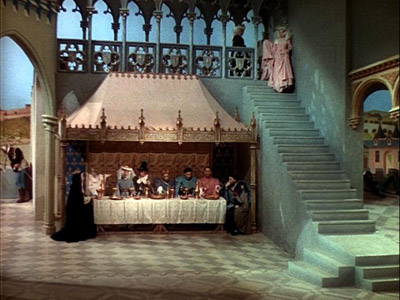 What is a "culture", after all, but national habitus raised to the status of a principle? A principle (Britishness, Japaneseness) you could sum up in a few words, a sort of global brand, a thing you could export (by peaceful or even non-peaceful means)? Another irony in all this is that it's precisely when national habitus becomes a principle that it becomes an exportable commodity. Cultural "purity" (for instance, Jamaica being a place where black people record reggae records) is a useful fiction, the condition of an individual culture's entry into the very international flow thought to undermine it.
Here's the big paradox behind all these little paradoxes: that which undermines national character also creates it. Morrissey's laments on disappearing Britishness actually produce Britishness; they make it appear. The Japanese are almost Japanese, and made more so by the self-consciousness produced by globalisation. Shiva the creator is also Shiva the destroyer. I will see you in far off places, Morrissey. Thanks for making me think.
It isn't racism, of course -- to talk about a national culture being diluted by immigration is not automatically to be racist, especially when, as in Britain, the most significant recent influx has been a Caucasian one from Eastern Europe. But neither is tolerance tolerance if it can't tolerate either difference or intolerance. So what we're left with is a bunch of not-tolerant people shouting at a not-racist.
What has Morrissey actually said? He's said that Britain has changed, and not for the better. He's said that something has been lost: Britain's cultural particularity is being diminished, and more quickly than in countries like Germany and Sweden. For this he blames excessive rates of immigration. As a consequence, he says -- and the irony is delicious -- he has left Britain and settled in Italy, making Rome just that tiny bit more British in the process. There's a further irony in that Morrissey himself is the son of immigrants, Irish who came to England. And there's another in the fact that the Britain he seems to see as the Golden Age -- the Britain of the Ealing Comedies and the films of The Archers -- was a confection largely constructed by Jewish immigrants like Emeric Pressburger and Michael Balcon.
My views on this are almost the polar opposite to Morrissey's in every particular. I'm not sure if this makes me a better person, though. In fact, it probably makes me a worse person. You see, I dislike countries like England, Germany and Sweden. I even dislike my own home nation of Scotland. My basic feeling is that, left to their own devices, these nations become smug and provincial and poisonous. When I'm in nations like these I desperately seek out enclaves of foreignness. The Pakistani or Chinese shops on Edinburgh's south side have a kind of ambition and dynamism I don't find in the Scottish-run shops. They provide a vitality which is lacking in the indigenous mass. My people, white people, are lazy and in decline. We don't even replace ourselves at the necessary rate. We're content to ebb away. We let our languages die out, we let our jobs migrate to China, we don't have enough kids, and those we do have leave, as I left, if they have any ambition at all. That's the basic picture I see, and immigration is a very welcome antidote. There isn't enough immigration.
During my four years in Berlin I've desperately missed the cultural mix found in cities like New York, London and Paris. Only since moving to Neukolln, a working class district dominated by Turks, North Africans, Indians and Vietnamese, have I found something approaching it. My feeling is that the Turkish market on the Maybachufer is the closest thing to a medieval European market you'll ever find, in terms of its density and vitality. My feeling is that this is very much about markets, that what I know as cosmopolitanism is very much a question of markets. I'm very much in favour of the free flow of people and money, which is the basic principle of the European Union. Certainly something is lost when new people flow into a city -- usually something stolid and smug and lumpen, something best lost.
The inherent contradiction in Morrissey's position is that he's objecting, essentially, to globalisation (because this is a debate about the merits or demerits of globalisation, not racial mixing) while participating fully in it by traveling endlessly and living as a foreigner in Rome. But contradictions are okay, I don't think we should persecute people for having mixed or contradictory feelings. If we did, we'd never allow shifts in opinion at all. In fact, we'd have to outlaw feelings altogether.
My own feelings on this matter contain their own fair share of contradictions. For instance, I only love immigration because I hate the indigenous, "pure" nations of the West and want them to be changed utterly by people I see as more vital, passionate, ambitious and interesting. People like the British Bangladeshi community I married into in 1994. When I love an indigenous culture -- like the Japanese one -- my feelings get much more complicated. I actually see how, in Japan, the sense that the nation is like a big extended family brings with it a lot of liberties. The safety, the strong sense of harmony and common purpose, the superlegitimacy, the almost total absence of Christianity, all these are strongly related to Japan's resistance to immigration. But, left to its own devices, Japan will decline and fade, its vibrant culture will grow tepid. It needs Asian immigration. So I'm not even sure I want Japan to be pure. My "Japanese" girlfriend is half Korean. My favourite parts of Tokyo and Yokohama are the immigrant bits, the Chinatowns.
If purity doesn't matter, though, the exact nature of the inevitable impurity does. I think what annoys me most -- whether in Asia or Europe -- is seeing excessive American cultural influence, or English-language ("Anglosphere") influence. Seeing US sitcoms on Swedish TV, for instance, worried me and made me think how good it is that Japanese TV isn't like that. Seeing Britain's most famous film critic, Mark Kermode, basically steeped up to his eyeballs in American film and the American values they convey worries me too. Culture flows through English channels -- but not for long, I wrote in Wired, predicting (and welcoming) a decline in Anglosphere dominance later this century. (Anglosphere dominance is already pretty limited -- do we all have American furniture or drive American cars? No, but we watch American films and help America fight its wars. For now.)
If I want to understand how Morrissey feels, I just have to think of how Britain has been flooded by American culture since the 1940s. But wait -- I don't care enough about Britain's indigenous culture to give much of a damn about that! So I have to do one more piece of mental gymnastics to see his point of view. I have to imagine I felt about Britain the way I feel about Japan -- a country I don't live in, just like Morrissey doesn't live in Britain, but somehow want (selfishly, emotionally) to embody something wonderful, unique, pure.
What is a "culture", after all, but national habitus raised to the status of a principle? A principle (Britishness, Japaneseness) you could sum up in a few words, a sort of global brand, a thing you could export (by peaceful or even non-peaceful means)? Another irony in all this is that it's precisely when national habitus becomes a principle that it becomes an exportable commodity. Cultural "purity" (for instance, Jamaica being a place where black people record reggae records) is a useful fiction, the condition of an individual culture's entry into the very international flow thought to undermine it.Here's the big paradox behind all these little paradoxes: that which undermines national character also creates it. Morrissey's laments on disappearing Britishness actually produce Britishness; they make it appear. The Japanese are almost Japanese, and made more so by the self-consciousness produced by globalisation. Shiva the creator is also Shiva the destroyer. I will see you in far off places, Morrissey. Thanks for making me think.
![[identity profile]](https://www.dreamwidth.org/img/silk/identity/openid.png)
Re: (not the same anon as above)
Date: 2007-12-02 05:28 pm (UTC)Thats because you're essentially moving the goalpost:
"the phrase "property is theft" is analogous to the phrase "slavery is murder". According to Proudhon, the slave, though biologically alive, is clearly in a sense "murdered". The "theft" in his terminology does not refer to ownership anymore than the "murder" refers directly to physiological death, but rather both are meant as terms to represent a denial of specific rights."
so yes, Ive heard your "ITS FIGURATIVE, ASSHOLE!" explaination before.
However, ultimately, I feel this arguement is still flawed.
"the laborer retains, even after he has received his wages, a natural right of property in the thing which he has produced." Taking away this property of the labourer (as is normally done in an employer-employee relationship), is theft."
I dont agree with this at all, its so blinkered and black and white. For example, lets say a man works in factory making toys. You could argue that because hes made those toys, he has "natural right" to ownership of those toys, so his employer making money out of him by selling those toys is wrong. The problem is, the toy maker would have never had the opportunity to build toys in the first place if it wasnt for the employer. The toy maker gets paid for his labour, but ultimately the raw materials and the factory are owned by the owner. its not as clean cut as "he made it, its his right to it".
Re: (not the same anon as above)
Date: 2007-12-05 12:03 am (UTC)"the laborer retains, even after he has received his wages, a natural right of property in the thing which he has produced." Taking away this property of the labourer (as is normally done in an employer-employee relationship), is theft."
"For example, lets say a man works in factory making toys. You could argue that because hes made those toys, he has "natural right" to ownership of those toys, so his employer making money out of him by selling those toys is wrong."
I think this whole argument is missing the point. It's pretty nonsensical to talk about ownership of products, instead we should be examining the ownership of the means of production of said products, as this ongoing process is what really underpins the hierarchy in a society.
When one factory owner, or more commonly a small group of directors enrich themselves and accumulate capital and hence power, it is only possible because the profits and fruits of the labour of the many are being concentrated in the hands of the few. You don't need me to spell out the injustice inherent in that relationship.
Re: (not the same anon as above)
Date: 2007-12-05 12:57 am (UTC)Communism wants equality of incomes. However, as seen demonstrated in numerous communist countries, when equality of income is on the horizen, productivity disappears. people work so they can support themselves. They work motivated by the incentive of money and succeeding. In capitalist systems, if you choose not to work you suffer the consequences while he who works receives the benifits; money. with a desire to make money, people are driven to work harder, seek further education, and develop skills which distinguish them as workers. Under true communism, income is completely equal. When there is nothing to achieve by working harder, people begin to become idle. People work less or not work at all because there is no longer the incentive of advancing. When there are no workers, production drops to nothing. Economies colapse under communist regime. And I havent even begun to get into the almost inevitable corruption -- absolute power corrupts abolsutely. We've seen in in North Korea and the former Soviet.
Communism doesnt work. It never has worked, and it never will work. Capitalism with socialist aspects is the realistic way forward. Life isnt "fair", life isnt equal, some people are better off than others. Learning to accept this is the way forward for society. I mean really, what next? Are you gonna start arguing that all people should be stripped on their identities for the "greater good" of equality? Where does your deluded desire for "equality" (a totally subjective, man-made concept, not one of natural law) stop?
Im just glad that people like you, sitting behind your expensive Imacs, living your comfy lives off the capitalism you so despise like hypocrites dont have any power what so ever coz you'd fuck it up for everyone with your far-left nonsense.
Re: (not the same anon as above)
Date: 2007-12-05 01:40 am (UTC)This sounds suspiciously like Norman Tebbit. conveniently forgetting that unemployment is a defining feature of capitalism, its nothing to do with 'choosing not to work.'
"Under true communism, income is completely equal."
No. not necessarily, "from each according to his ability, to each according to his labour power". Have you ever read any Marx? from your total cluenessness about socialism, as revealed in statements like that, it would appear not...
"When there is nothing to achieve by working harder, people begin to become idle. People work less or not work at all because there is no longer the incentive of advancing."
once more, this comes down not so much to an argument about politics but to one about one's valuation of people, of humanity. You clearly think people are inherently dishonest, lazy, etc and need to be kept in line so they know whats good for 'em. You forget that if people believe in a cause, such as working for a better society, they will have incentive enough to move mountains and work above and beyond the norm. I pity you, who can't imagine anyone doing such a thing.
"Life isnt "fair", life isnt equal, some people are better off than others."
How convenenient. That is truth by assertion, that things can't change. history has proven you wrong. let me guess, you're not on the receiving end of the sharp end of capitalism or you wouldn't spout this glib, soundbite garbage.
"Im just glad that people like you, sitting behind your expensive Imacs, living your comfy lives off the capitalism you so despise"
ROFL. what's an Imac? how do you know I 'live off capitalism's back'? or indeed have a comfly life?!
If you run out of arguments you'd do better to say nothing rather than make such spurious assertions.
Re: (not the same anon as above)
Date: 2007-12-05 02:09 am (UTC)unemployment exists within capitalist societies, thats where socialist policies come in. I never said capitalism was perfect, its just much much better than communism, and regardless of what you say, I have history backing me up on that.
"No. not necessarily, "from each according to his ability, to each according to his labour power". Have you ever read any Marx? from your total cluenessness about socialism, as revealed in statements like that, it would appear not..."
Marx isnt the be all and end all of communism anymore than KFC is the be all and end all of chicken. true communism entails total equality, I stick by that. for example, So, lets say a couple chooses to have a baby, under Marx's ideology that then means I have work harder to feed their sprog, which they chose to have. How exactly is that fair? Oh wait, it isnt, communism is just nonsense.
" You clearly think people are inherently dishonest, lazy, etc and need to be kept in line so they know whats good for 'em"
people dont need to be kept in line with capitalism, capitalism works for itself. Communism, well, its slaughterd millions for its cause so if you wanna talk about "keeping them in line", thats communist methods for you. What communism fails to take into account is INDIVIDUALITY. You will never create a society of millions all working like mindless robots for "the cause" because people differ, its not about humans being inherantly bad, its about there always being people who wont always agree with each other on how to live.
"guess, you're not on the receiving end of the sharp end of capitalism or you wouldn't spout this glib, soundbite garbage."
Well, I come from a working class background, my family isnt rich and my income isnt high. Ive never once felt "opressed by the elites". Infact, i owe this country everything I have, Im very lucky.
"how do you know I 'live off capitalism's back'? or indeed have a comfly life?!"
You live in a rich western europian country. People like you are a penny a dozen -- far left liberals who hark on about socialism and communism but ultimately you spend your lives enjoy all the pleasures of capitalism. Its hard to take you seriously.
Re: (not the same anon as above)
Date: 2007-12-05 03:18 am (UTC)????? so what are you saying? surely that contradicts your earlier frothing about how it promotes laziness, etc etc....
"So, lets say a couple chooses to have a baby, under Marx's ideology that then means I have work harder to feed their sprog, which they chose to have. How exactly is that fair?"
I think you'll find most western societies have some form of child support or other structures in place for that. it isn't exclusive to communism. As an aside, the percentge spent on that is trivial and dwarfed by that spent on, say, arms, or industrial subsidies or tax cuts for the rich corporations (who end up fucking off and taking the jobs elsewhere after receiving them anyway!). so you probably 'end up working harder' to support those very parasites communism aims to control.
"people dont need to be kept in line with capitalism, capitalism works for itself. "
nonsense. capitalism does not 'work for itself'. it depends on exploiting the resources of the poorer half of the planet. western nations live only THREE months of the year off their own resources. It condemns large sections of populations to the scrapheap of unemployment, conveniently used to threaten people and keep them 'in line' - i.e 'don't complain, sit back and take shit conditions or else.'
"Communism, well, its slaughterd millions for its cause"
the crimes of Stalin are a drop in the ocean compared to the millions condemned to starvation and poverty and dying DAILY under capitalism.
"What communism fails to take into account is INDIVIDUALITY"
no, thats capitalism. in the case of millions around the world today, it's pretty hard to be individual when you've got no money or power and all your choices are made for you by the powerful. Communism is the only system which guarantees universal health, free education and equality of opportunity for all. Not the false individuality sold to us by self interested industry.
"its about there always being people who wont always agree with each other on how to live."
that may be, but when you have a society (and a world)with vast divisions of class and wealth which are hallmarks of capitalism, in the search for profit these are accentuated to the point where there's more conflict, as it becomes a matter of survival. on the other hand a participative democracy (unlike that found in capitalism) would go a long way to resolving this sort of difference of opinions, as nobody would have disproportionate control or power to fuck over another. You'd heal lot of the fundamental grievances that way - the democratic process.
"Ive never once felt "opressed by the elites"
so they must be alright then. allow me to pojt out hat that is sadly not the case for millio0ns around the world, but i'm just glad i don't share your indifference and 'I'm alright jack' point of view.
"You live in a rich western europian country....you spend your lives enjoy all the pleasures of capitalism."
More guesswork in place of solid arguments. It's getting to be hilarious.....it's even harder to take people like YOU seriously
Re: (not the same anon as above)
Date: 2007-12-05 10:03 am (UTC)No because socialist policies within Capitalism help support the vulnerable whislt still allowing one to better themselves materially. Under communism it doesnt matter how hard I work, I'm still just given a loaf of bread each day - thats why communist economies collapse, nobody is motivated.
"capitalism does not 'work for itself'. it depends on exploiting the resources of the poorer half of the planet.
China and India's economies are growing rapidly, but they wouldnt if it wasnt for the west "exploiting" them. The western world had its post-industrial history, we had to go through what China and India are going through. As for Africa, you can throw money at it till you're blue in the face but the governments are incompetent and corrupt... what are we supposed to do? Invade them and overthrow the government? Stop being so naive.
western nations live only THREE months of the year off their own resources.
This needs to change, that much I agree with you on.
It condemns large sections of populations to the scrapheap of unemployment, conveniently used to threaten people and keep them 'in line' - i.e 'don't complain, sit back and take shit conditions or else.'
Only 5.5% of the UK is currently unemployed, and that 5.5% are living off state handouts. They have their lives payed for... how is that any different to how itd be under communism? Under Capitalism with socialist aspects, the very bottom of the ladder have their housing and income provided by the government, but those who can work and can earn do earn and live a more comfortable life. Under communism, I'll still have to work for those who arents motivated or capable of working, but I'll be in exactly the same boat as them. Hence the complete lack of motivation... id rather just join that minority of people who cant or wont!
"the crimes of Stalin are a drop in the ocean compared to the millions condemned to starvation and poverty and dying DAILY under capitalism.
Communism is DIRECTLY resposible for millions of deaths. As for capitalism "condemning" millions to starvation, what are we supposed to do? Throw money at africa and hope things change? Theres a massive problem with government in africa, very little changes despite the aid we send because of the governments. little other than invade Africa, I dont see how we can do anything.
"participative democracy (unlike that found in capitalism) would go a long way to resolving this sort of difference of opinions, as nobody would have disproportionate control or power to fuck over another."
There will always be those who have power and those who dont within a society -- capitalism or communist, someone is behind it pulling all the strings, and thats the way it should be because ultimately, the public isnt knowledgable enough to run its own affairs. Government should be accountable, but handing total control over to tiny groups all divided isnt smart.
"so they must be alright then. allow me to pojt out hat that is sadly not the case for millio0ns around the world, but i'm just glad i don't share your indifference and 'I'm alright jack' point of view."
Like I pointed out, you cant throw money at a situation, there needs to someone properly controlling and shaping a society, and unfortunately a lot of 3rd world countries have ineffective governments. Theres nothing we can do. Europe tried to colonise the world, "white mans burden" is over, unfortunately we cant change those governments that now have power. thats not capitalisms fault, thats shitty governing to blame.
"More guesswork in place of solid arguments."
you live in Spain. Last time I checked, Spain is a rich, western Europian country, just like Britain.
Re: (not the same anon as above)
Date: 2007-12-05 11:17 pm (UTC)in other words they go a short way to offset the damage done by the corporate world. Like when a company relocates and sacks thousands of people, we - not them - all have to pick up the tab. very nice....
"As for Africa, you can throw money at it till you're blue in the face but the governments are incompetent and corrupt... what are we supposed to do? Invade them and overthrow the government? Stop being so naive."
You're the one who is being naïve. look at who keeps most of those corrupt governments in power! western corporations. In Nigeria, for example, the military has protected Shell and attacked oil workers and local people protesting against environmental damage.
"Theres a massive problem with government in africa, very little changes despite the aid we send because of the governments. little other than invade Africa, I dont see how we can do anything."
Rubbish- firstly instead of sending money, we'd do more by not letting western businesses fuck them over and diddle with their legislative machinery for a start. Demand more ethical behaviour instead of the drive for profits. But thats not going to happen under the current system as the powerful have so much tied up in this situation. so we're told to send money, as that's not a threat to our current destructive lifestyles which favour the powerful.
"There will always be those who have power and those who dont within a society -- capitalism or communist, someone is behind it pulling all the strings, and thats the way it should be"
that says a lot about your low view of humanity- what is this shit, don't give people rights in case they use them? fortunately there are people unlike yourself who believe in democracy - real stuff, not just voting once every 4 years and let people pull the strings for you. In fact, if you're talking about people pulling strings, you're talking about a representative, not participative democracy. Not what i'm on about at all.
"Like I pointed out, you cant throw money at a situation"
-Now you are deliberately misconstruing what I said. The solution to these problems is not a charitable one, like live aid and the like would have us believe, it is a political one. it's about not letting powerful corporations destroy the political life of the third world, keeping corrupt despots in power, exporting the wealth of the countries to the western shareholders, whilst oppressing the native people.
"you live in Spain"
so what does this have to do with the argument? or is where you live a precondition for being able to argue one's case?