I will see you in far off places
Dec. 1st, 2007 11:16 am![[personal profile]](https://www.dreamwidth.org/img/silk/identity/user.png) imomus
imomusIt's absolutely part of Morrissey's value that he provokes debate like the one now raging (well, re-raging, actually, but with the threat of litigation this time) over his comments to the NME on immigration. Thinking with feeling means upsetting people from time to time. In this case, the old paradox about tolerance accepting everything except actual difference has quickly been reached. "Tolerant" people -- people who don't share but are willing to countenance Morrissey's homosexuality, for instance -- are unwilling to countenance what they see as his racism.

It isn't racism, of course -- to talk about a national culture being diluted by immigration is not automatically to be racist, especially when, as in Britain, the most significant recent influx has been a Caucasian one from Eastern Europe. But neither is tolerance tolerance if it can't tolerate either difference or intolerance. So what we're left with is a bunch of not-tolerant people shouting at a not-racist.
What has Morrissey actually said? He's said that Britain has changed, and not for the better. He's said that something has been lost: Britain's cultural particularity is being diminished, and more quickly than in countries like Germany and Sweden. For this he blames excessive rates of immigration. As a consequence, he says -- and the irony is delicious -- he has left Britain and settled in Italy, making Rome just that tiny bit more British in the process. There's a further irony in that Morrissey himself is the son of immigrants, Irish who came to England. And there's another in the fact that the Britain he seems to see as the Golden Age -- the Britain of the Ealing Comedies and the films of The Archers -- was a confection largely constructed by Jewish immigrants like Emeric Pressburger and Michael Balcon.

My views on this are almost the polar opposite to Morrissey's in every particular. I'm not sure if this makes me a better person, though. In fact, it probably makes me a worse person. You see, I dislike countries like England, Germany and Sweden. I even dislike my own home nation of Scotland. My basic feeling is that, left to their own devices, these nations become smug and provincial and poisonous. When I'm in nations like these I desperately seek out enclaves of foreignness. The Pakistani or Chinese shops on Edinburgh's south side have a kind of ambition and dynamism I don't find in the Scottish-run shops. They provide a vitality which is lacking in the indigenous mass. My people, white people, are lazy and in decline. We don't even replace ourselves at the necessary rate. We're content to ebb away. We let our languages die out, we let our jobs migrate to China, we don't have enough kids, and those we do have leave, as I left, if they have any ambition at all. That's the basic picture I see, and immigration is a very welcome antidote. There isn't enough immigration.

During my four years in Berlin I've desperately missed the cultural mix found in cities like New York, London and Paris. Only since moving to Neukolln, a working class district dominated by Turks, North Africans, Indians and Vietnamese, have I found something approaching it. My feeling is that the Turkish market on the Maybachufer is the closest thing to a medieval European market you'll ever find, in terms of its density and vitality. My feeling is that this is very much about markets, that what I know as cosmopolitanism is very much a question of markets. I'm very much in favour of the free flow of people and money, which is the basic principle of the European Union. Certainly something is lost when new people flow into a city -- usually something stolid and smug and lumpen, something best lost.

The inherent contradiction in Morrissey's position is that he's objecting, essentially, to globalisation (because this is a debate about the merits or demerits of globalisation, not racial mixing) while participating fully in it by traveling endlessly and living as a foreigner in Rome. But contradictions are okay, I don't think we should persecute people for having mixed or contradictory feelings. If we did, we'd never allow shifts in opinion at all. In fact, we'd have to outlaw feelings altogether.

My own feelings on this matter contain their own fair share of contradictions. For instance, I only love immigration because I hate the indigenous, "pure" nations of the West and want them to be changed utterly by people I see as more vital, passionate, ambitious and interesting. People like the British Bangladeshi community I married into in 1994. When I love an indigenous culture -- like the Japanese one -- my feelings get much more complicated. I actually see how, in Japan, the sense that the nation is like a big extended family brings with it a lot of liberties. The safety, the strong sense of harmony and common purpose, the superlegitimacy, the almost total absence of Christianity, all these are strongly related to Japan's resistance to immigration. But, left to its own devices, Japan will decline and fade, its vibrant culture will grow tepid. It needs Asian immigration. So I'm not even sure I want Japan to be pure. My "Japanese" girlfriend is half Korean. My favourite parts of Tokyo and Yokohama are the immigrant bits, the Chinatowns.

If purity doesn't matter, though, the exact nature of the inevitable impurity does. I think what annoys me most -- whether in Asia or Europe -- is seeing excessive American cultural influence, or English-language ("Anglosphere") influence. Seeing US sitcoms on Swedish TV, for instance, worried me and made me think how good it is that Japanese TV isn't like that. Seeing Britain's most famous film critic, Mark Kermode, basically steeped up to his eyeballs in American film and the American values they convey worries me too. Culture flows through English channels -- but not for long, I wrote in Wired, predicting (and welcoming) a decline in Anglosphere dominance later this century. (Anglosphere dominance is already pretty limited -- do we all have American furniture or drive American cars? No, but we watch American films and help America fight its wars. For now.)
If I want to understand how Morrissey feels, I just have to think of how Britain has been flooded by American culture since the 1940s. But wait -- I don't care enough about Britain's indigenous culture to give much of a damn about that! So I have to do one more piece of mental gymnastics to see his point of view. I have to imagine I felt about Britain the way I feel about Japan -- a country I don't live in, just like Morrissey doesn't live in Britain, but somehow want (selfishly, emotionally) to embody something wonderful, unique, pure.
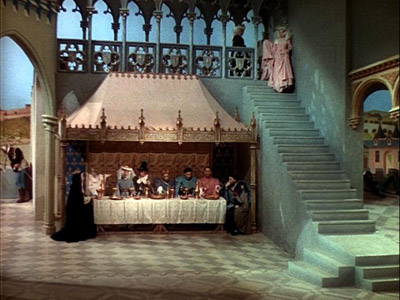 What is a "culture", after all, but national habitus raised to the status of a principle? A principle (Britishness, Japaneseness) you could sum up in a few words, a sort of global brand, a thing you could export (by peaceful or even non-peaceful means)? Another irony in all this is that it's precisely when national habitus becomes a principle that it becomes an exportable commodity. Cultural "purity" (for instance, Jamaica being a place where black people record reggae records) is a useful fiction, the condition of an individual culture's entry into the very international flow thought to undermine it.
Here's the big paradox behind all these little paradoxes: that which undermines national character also creates it. Morrissey's laments on disappearing Britishness actually produce Britishness; they make it appear. The Japanese are almost Japanese, and made more so by the self-consciousness produced by globalisation. Shiva the creator is also Shiva the destroyer. I will see you in far off places, Morrissey. Thanks for making me think.
It isn't racism, of course -- to talk about a national culture being diluted by immigration is not automatically to be racist, especially when, as in Britain, the most significant recent influx has been a Caucasian one from Eastern Europe. But neither is tolerance tolerance if it can't tolerate either difference or intolerance. So what we're left with is a bunch of not-tolerant people shouting at a not-racist.
What has Morrissey actually said? He's said that Britain has changed, and not for the better. He's said that something has been lost: Britain's cultural particularity is being diminished, and more quickly than in countries like Germany and Sweden. For this he blames excessive rates of immigration. As a consequence, he says -- and the irony is delicious -- he has left Britain and settled in Italy, making Rome just that tiny bit more British in the process. There's a further irony in that Morrissey himself is the son of immigrants, Irish who came to England. And there's another in the fact that the Britain he seems to see as the Golden Age -- the Britain of the Ealing Comedies and the films of The Archers -- was a confection largely constructed by Jewish immigrants like Emeric Pressburger and Michael Balcon.
My views on this are almost the polar opposite to Morrissey's in every particular. I'm not sure if this makes me a better person, though. In fact, it probably makes me a worse person. You see, I dislike countries like England, Germany and Sweden. I even dislike my own home nation of Scotland. My basic feeling is that, left to their own devices, these nations become smug and provincial and poisonous. When I'm in nations like these I desperately seek out enclaves of foreignness. The Pakistani or Chinese shops on Edinburgh's south side have a kind of ambition and dynamism I don't find in the Scottish-run shops. They provide a vitality which is lacking in the indigenous mass. My people, white people, are lazy and in decline. We don't even replace ourselves at the necessary rate. We're content to ebb away. We let our languages die out, we let our jobs migrate to China, we don't have enough kids, and those we do have leave, as I left, if they have any ambition at all. That's the basic picture I see, and immigration is a very welcome antidote. There isn't enough immigration.
During my four years in Berlin I've desperately missed the cultural mix found in cities like New York, London and Paris. Only since moving to Neukolln, a working class district dominated by Turks, North Africans, Indians and Vietnamese, have I found something approaching it. My feeling is that the Turkish market on the Maybachufer is the closest thing to a medieval European market you'll ever find, in terms of its density and vitality. My feeling is that this is very much about markets, that what I know as cosmopolitanism is very much a question of markets. I'm very much in favour of the free flow of people and money, which is the basic principle of the European Union. Certainly something is lost when new people flow into a city -- usually something stolid and smug and lumpen, something best lost.
The inherent contradiction in Morrissey's position is that he's objecting, essentially, to globalisation (because this is a debate about the merits or demerits of globalisation, not racial mixing) while participating fully in it by traveling endlessly and living as a foreigner in Rome. But contradictions are okay, I don't think we should persecute people for having mixed or contradictory feelings. If we did, we'd never allow shifts in opinion at all. In fact, we'd have to outlaw feelings altogether.
My own feelings on this matter contain their own fair share of contradictions. For instance, I only love immigration because I hate the indigenous, "pure" nations of the West and want them to be changed utterly by people I see as more vital, passionate, ambitious and interesting. People like the British Bangladeshi community I married into in 1994. When I love an indigenous culture -- like the Japanese one -- my feelings get much more complicated. I actually see how, in Japan, the sense that the nation is like a big extended family brings with it a lot of liberties. The safety, the strong sense of harmony and common purpose, the superlegitimacy, the almost total absence of Christianity, all these are strongly related to Japan's resistance to immigration. But, left to its own devices, Japan will decline and fade, its vibrant culture will grow tepid. It needs Asian immigration. So I'm not even sure I want Japan to be pure. My "Japanese" girlfriend is half Korean. My favourite parts of Tokyo and Yokohama are the immigrant bits, the Chinatowns.
If purity doesn't matter, though, the exact nature of the inevitable impurity does. I think what annoys me most -- whether in Asia or Europe -- is seeing excessive American cultural influence, or English-language ("Anglosphere") influence. Seeing US sitcoms on Swedish TV, for instance, worried me and made me think how good it is that Japanese TV isn't like that. Seeing Britain's most famous film critic, Mark Kermode, basically steeped up to his eyeballs in American film and the American values they convey worries me too. Culture flows through English channels -- but not for long, I wrote in Wired, predicting (and welcoming) a decline in Anglosphere dominance later this century. (Anglosphere dominance is already pretty limited -- do we all have American furniture or drive American cars? No, but we watch American films and help America fight its wars. For now.)
If I want to understand how Morrissey feels, I just have to think of how Britain has been flooded by American culture since the 1940s. But wait -- I don't care enough about Britain's indigenous culture to give much of a damn about that! So I have to do one more piece of mental gymnastics to see his point of view. I have to imagine I felt about Britain the way I feel about Japan -- a country I don't live in, just like Morrissey doesn't live in Britain, but somehow want (selfishly, emotionally) to embody something wonderful, unique, pure.
What is a "culture", after all, but national habitus raised to the status of a principle? A principle (Britishness, Japaneseness) you could sum up in a few words, a sort of global brand, a thing you could export (by peaceful or even non-peaceful means)? Another irony in all this is that it's precisely when national habitus becomes a principle that it becomes an exportable commodity. Cultural "purity" (for instance, Jamaica being a place where black people record reggae records) is a useful fiction, the condition of an individual culture's entry into the very international flow thought to undermine it.Here's the big paradox behind all these little paradoxes: that which undermines national character also creates it. Morrissey's laments on disappearing Britishness actually produce Britishness; they make it appear. The Japanese are almost Japanese, and made more so by the self-consciousness produced by globalisation. Shiva the creator is also Shiva the destroyer. I will see you in far off places, Morrissey. Thanks for making me think.
![[identity profile]](https://www.dreamwidth.org/img/silk/identity/openid.png)
(no subject)
Date: 2007-12-01 01:36 pm (UTC)There's a couple of points you've raised I'd like to tackle.
I've made it very clear numerous time I'm an advocate of free speech... but doesnt everyone say that? What I mean by that is I advocate free speech with less strings attached than most people. For example (also discussed on Question Time this week) there was the issue of the BNP speaking at the the Oxford Union (http://news.bbc.co.uk/1/hi/england/oxfordshire/7110758.stm) which sparked a lot of controversy because the BNP are pretty much just a pro-white group with a raging boner for Britian's white christian pre-1940s past... mainly because those idealisms come suger-coated with a large dose of miscontrued, merry old English Hallmark cark-esque idealism. Cup of Earl Grey, anyone?
The problem with not allowing the BNP to speak about their views is although you might find them abhorant (I find them laughable mostly) if you dont let them speak, you become the monster you're fighting. You become the liberal fascist. Some people have tried to argue that actually, the protests aren't about disallowing free speech but about the Oxford Union giving legitimacy to the BNP by inviting them. This clearly isnt the case because not once has the Union ever expressed that they're inviting the BNP because they agree with them, and they clearly stated the debate was about 'A Night of Discussion on the Limits of Free Speech' (http://www.oxford-union.org/press/free_speech_forum_-_presidents_message_to_members)
Should the BNP be allowed to say they prefered Britain when It was predominantly white and christian? Absolutely. Should Morrisey be allowed to say immigration is diluting Britain's identity? Absolutely. The real argument starts when you try to draw a distinction between "inciting hatred" and free speech, which is very complicated. As a general rule I favor punishing actions as opposed to just ideas expressed, but there's grey area that requires a case by case basis to be taken.
(no subject)
Date: 2007-12-01 01:38 pm (UTC)A hell of a lot of people in Britian love Indian cuisine (I love Indian cuisine), and that's why the Chicken Tikka Musala (Britians favourite take-away meal) has a very distinctly British identity.
The BNP tries to argue that being white and christian is what Britain is all about. "We're a white, Christian nation and we're proud of it!" the BNP proclaims.
Actually... Paganism is more British than Christianity. Christianity was brought over to Britainn by those dirty foreigners. Druidism/paganism is the native religion of Britain. We Britons used to worship nature, much like Japanese Shinto. And the English language, a bit of an imposter really... English isnt actually that English. again, The invaders' Germanic language (which has now evolved into English) displaced the indigenous Brythonic languages of what became England. The Celtic languages remained in Scotland, Wales and Cornwall. Infact, Cymraeg (Welsh) is supposedly the oldest language in Europe, it doesnt get anymore British than that... if British means "How it used to be".
So basically, for thousands of years, "Britian's culture" has only come to be because of "foreigners" invading us and displacing the culture that was there before. Exactly what's happening now! What a surprise! And guess what I'm having for dinner tonight? Curry!
Last point I'd like to raise: hating "British culture".
I can't stand football. Binge drinking and pub culture? yawn. The average food items of the British makes me sad when I see the mainland Europians having so much fun with so many ingedients. British TV? The majority of it is shit. Everywhere you look you see terracotta roofs and semi-detached housing. Without exhausting cliches, I grew up surrounded by all the mediocrity Britain has to offer. Everything novel about Britain isnt novel to me because it's what I grew up with. It's the proverbial back of my British hand.
To a certain extent I idealise Japan in my head. I dont live there, I never grew up there, so almost everything I come across that's Japanese has some kind of freshness about it. but its not just about novelty and freshness, its about finding something that matches your sensibilities.
The popularity of Japanese culture has grown hugely over the past 10 years (what with the huge rise in Japanese pop-culture imports) although it hasnt reached the ubiquity of American culture. Japan has Sumo, which I find really exciting (the salt ritual, the costumes...) but really, it's just "football" to the Japanese. And the Japanese have the Izukaya; traditionally an establishment of sturdy wood and paper screens creating a gentle, fresh, open-air atmosphere... but again, its still just a "pub". Japanese cuisine is such a delight to behold visually but I'm sure after years of consuming it it loses some of its sparkle. It's all about novelty really. American culture doesnt particularly excite me, but I dont think a lot of Americans realise how americanised the rest of the English speaking world is becoming. It used to be that the Americans were considered our American cousins, now they're more like our American brothers.
I use Mixi, the Japanese social site quite a lot. I come across a lot of Japanese people who are really into "British culture"... some of them have a love of idealism that borders on fantasy; the blond haired blue eyed English girl in a pretty frock, drinking from a bone china tea set (youd be surprised how much this appears in Anime). Some have a more complex love of British culture and find a beauty in its mediocrity I dont.
the bottom line is, Nobody idealises the familiar.
(no subject)
Date: 2007-12-01 01:52 pm (UTC)"Britian culture" is an average of every individual's choices, and by that I mean Britian's culture is what you see right now. Anything other than that is short-sighted sentimentality stuck in the past.
This view comes from confusing statistics with archetypes. Brecht had a good distinction between "folk music" and "population music". Folk music is a canonical set of archetypal themes that sum up a nation's identity while, possibly, describing absolutely nothing about its present population. "Population music" would be the statistical, objective use of music in the nation -- and it would possibly say absolutely nothing about who the nation thought it was. For instance, you could find everyone in Sweden listening to Timbaland productions, but that having no effect whatsoever on what they defined as "Swedishness".
In other words, you've underestimated the power of myth and fiction and archetype in the construction of national identity, which operates in our global times as a kind of brand. Any brand manager will tell you that you have to keep a brand big and simple to keep it powerful. The very last thing you have to do is keep a brand "real".
(no subject)
Date: 2007-12-01 02:37 pm (UTC)Traditional British culture is outside of globalism. It's "pure", but yet not really, as demonstrated by "Britain is pagan, not Christian" example. "traditional culture" only exists because people reapproriate that narrative into something pure and within, as opposed to celebrating it's foreign roots and evolution.
The Americans, they're just a boiling pot of Europians, but that doesnt stop them defining what it is to be "American". The Japanese art movement Superflat plays with this notion a lot -- Anime was born of Japanese artists emulating American animators. They reappropriated it for Japan, until it finally became "Japanese".
In a 1000 years time, anime of today will be traditional Japanese art, even though it was profoundly influenced by American artists.
Do you not see the point im trying to make here? We dont exist in isolation, we are deeply affected by the world around us; the notion of "Traditional culture" cant exist without ignoring this fact, thats why its delusional and sentimental only.
(no subject)
Date: 2007-12-01 04:20 pm (UTC)(no subject)
Date: 2007-12-01 04:52 pm (UTC)In its simplist sense, national tradition is national history thats been reappropriated as pure and of the country, when in reality all cultures have been influenced by each other.
Culture of today will be the tradition of tommorrow.
(no subject)
Date: 2007-12-02 03:55 pm (UTC)What about the African Americans the Asians and "Native" peoples?
(no subject)
Date: 2007-12-01 04:43 pm (UTC)No
What I mean by that is I advocate free speech with less strings attached than most people.
Free speech with strings attached is not free speech.
(no subject)
Date: 2007-12-01 05:27 pm (UTC)Excuse this really lame cliche:
I'm a muslim whos expressed extremist views. Ive taken under my wing 5 muslim youths. I'm teaching them exactly how to build bombs and we've dicussed the time and date we'd like set them off. No actions have been taken its purely speech so far. We're merely discussing what we'd like to happen.
No bombs have been built, no bombs have been set off... Should those 6 people be arrested now, arrested after the bombs are built, or arrested after they go off?
So you see, free speech is rather a complex issue, and it doesnt really exist by your definition anywhere in the world.
(no subject)
Date: 2007-12-01 05:49 pm (UTC)No
You're begging the question.
"who supplies the evidence?
it's not your mother
or your brother
or your best friend's dog"
(no subject)
Date: 2007-12-01 06:02 pm (UTC)Racist.
(no subject)
Date: 2007-12-01 07:59 pm (UTC)What gave you that idea?
Racist.
Fuck Face
Now, back to your lame cliche.
No bombs have been built, no bombs have been set off... Should those 6 people be arrested now, arrested after the bombs are built, or arrested after they go off?
They should be arrested when they break the law.
This is the same type of argument that led the U.S. to invade Iraq. Should we wait until the smoking gun is a mushroom cloud?
Your lame cliche is a bullshit hypothetical.
(no subject)
Date: 2007-12-01 08:23 pm (UTC)If only life were as simple as you, my friend.
At what point does someone break the law? "inciting racial hatred" is against the law. How do you define that exactly?
Free speech based on your rather "all or nothing" view means free speech doesnt exist anywhere in the world, and thank fuck it doesnt. It would mean you could plan a crime but only be arrested whilst actually executing it or after doing it. Whilst in theory this sounds fair, unfortunately in practice it would cripple the law enforcers and enable a lot of criminals to do as they pleased.
(no subject)
Date: 2007-12-01 11:19 pm (UTC)It's not against the law here. We have hate crime laws but see there's that word - crime. A crime has to be committed. Hate is not a crime.
It would mean you could plan a crime but only be arrested whilst actually executing it or after doing it. Whilst in theory this sounds fair...
No that doesn't sound fair at all. But you would have to have more evidence than a couple of Muslims sitting around talking shit.
Maybe your hypothetical needs to be fleshed out a bit more.
But please don't bother on my account.
(no subject)
Date: 2007-12-01 11:48 pm (UTC)Actually, there are laws against incitement to Riot. And there are laws against defamation of character. So clearly you can be penalised by the law for purely saying something.
WHERES YOUR FIRST AMMENDMENT NOW?
Like I said; grey area.
(no subject)
Date: 2007-12-02 02:36 am (UTC)So clearly you can be penalised by the law for purely saying something.
You called me a racist, I called you a fuck face.
If we were face to face on the street we might get into a fist fight (I'm not a tough guy - just a hypothetical). The cops come and we get arrested. NOT a free speech issue.
Libel, slander, incitement to riot. These are examples where words can lead to a court case but I think you're grasping at straws.
(no subject)
Date: 2007-12-02 05:32 pm (UTC)No, I think you've just been shown that the first ammendment isnt the ultimate freedom giver you like to think it is and you have a black and white view of free speech.
I can "incite" people to riot with words, and be arrested for that even if I havent done any rioting myself. Thats clearly an example of of words being punished. You lost this arguement 2 posts back.
(no subject)
Date: 2007-12-02 07:33 pm (UTC)