Tadshikische Teestube
Sep. 5th, 2007 01:17 pm![[personal profile]](https://www.dreamwidth.org/img/silk/identity/user.png) imomus
imomus Berlin's Tajikistan Teahouse overlooks I.M. Pei's German Historical Museum, but this orientalist interior has been in Mitte (hidden in the Palais am Festungsgraben, next door to the Gorki Theatre) much longer; the Soviet Union gifted the tearoom to socialist East Germany.
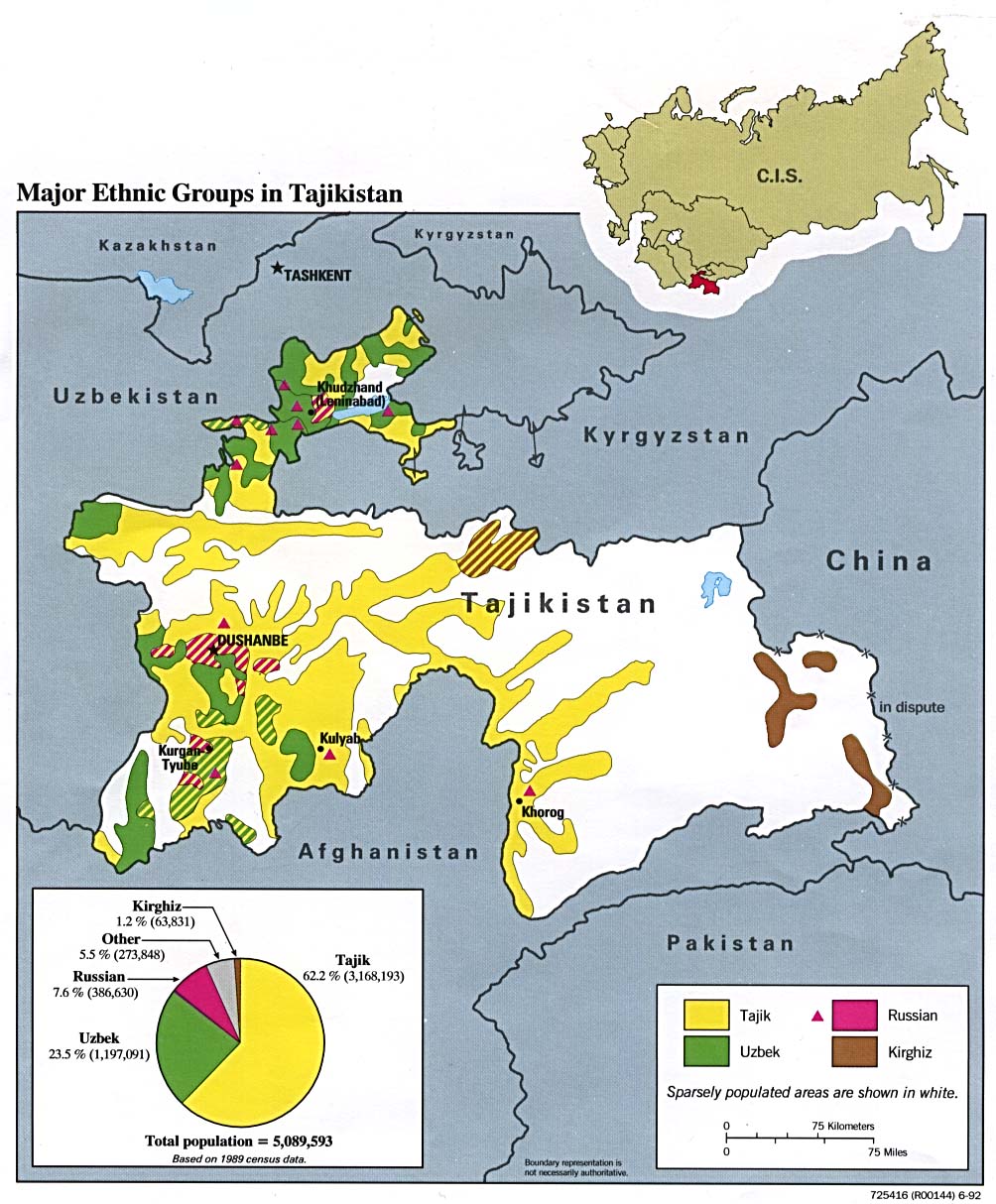
Amongst the Tadjik murals you'll find a cultural map of how the USSR looked at the time; the Stans are the exotic sector of the empire, southern satellites buffering Mother Russia from Iran, India and China. Culturally, though, the borderline is very porous: Tadjik lamps look Chinese, their customs overlap with the Afghans', their population is closely related to the Iranians. Since 1990 Tajikistan, riven by civil war, has become the poorest of the Stans. The removal of the Soviet administration left a power vacuum, with ethnic and tribal conflict destroying much of the mountainous country's infrastructure. The return of religions repressed under communism didn't help, either.

 The Soviet era was actually good for the cultural identity of the Stans -- a BBC Nomad report describes how the Russians built culture houses in the form of "wooden fairy tale castles" in amongst the brutalist concrete administrative buildings of their Central Asian regions, places like the Museum of Kazak Musical Instruments. The interplay of Stan and Soviet was mutually-enhancing, a forerunner of globalization's local-global identity dialectic -- a theme we play the subsidized harp about quite a bit here at Click Opera.
I was introduced to the Tadjik teahouse last weekend by journalist David Robert Smith. After removing my shoes and ordering a pot of "Margret Autumnal Daarjeeling", I got chatting to the man next to me, a friend of David's. He told me he was a musicologist specializing in decadence and neurosis and their reflection in 19th century classical music. "A musicologist, not an ethnomusicologist?" I asked, trying not to sound too disappointed. (I suppose you drop the "ethno" prefix when you're discussing the white ethnicity.) We got talking about Freud's patients in Vienna, and how the neuroses they suffered (hysterically frozen arms and the like) have all more or less disappeared from the world, only to be replaced by new ones like anorexia and bulimia. Afterwards we crossed the road and saw quite possibly the most boring opera ever made, the Faust story drowned in a sub-Schoenbergian soup.
I felt more at home in the Tajik Soviet Socialist Republic recreated in the Tadshikische Teestube than sitting through the stiff, bombastic European culture in the opera house across the road. I guess white European high culture brings out the ethnomusicologist in me.
![[identity profile]](https://www.dreamwidth.org/img/silk/identity/openid.png)
(no subject)
Date: 2007-09-05 11:32 am (UTC)(no subject)
Date: 2007-09-05 11:36 am (UTC)(no subject)
Date: 2007-09-05 11:36 am (UTC)(no subject)
Date: 2007-09-05 11:44 am (UTC)Re: hysterics; I had a friend in primary school who made herself psychosomatically lame because her parents would never allow her to outdo her brothers at anything. I daresay it still happens quite a lot among the very religious, where demands on women are different.
(no subject)
Date: 2007-09-05 02:59 pm (UTC)(no subject)
Date: 2007-09-05 06:00 pm (UTC)(no subject)
Date: 2007-09-05 03:36 pm (UTC)They do--but instead of new operas, mostly what gets made now is "Regietheater (http://en.wikipedia.org/wiki/Regietheater)", that is to say, remaking old operas in a way that reflects the director's hackneyed political "critique" (as if anyone should give a damn). It's "radical" and "cutting edge", which is to say these directors all "transgress" in exactly the same way--sheep who fancy themselves wolves. It's insensitive, lazy, and predictably dispiriting.
One will often see poised, frothy, lighthearted fare like Mozart turned into hateful, bombastic pastiche: prostitute’s nipples sliced off, masturbation, urination as foreplay, forced oral sex, Quentin Tarantino–esque bloodbaths...as if that was actually an artistic risk in our current culture. Yawn.
I want to see an opera director make an opera so sunny, humane, gentle, plaintive and sweet that the cynical critics universally pan it. Imagine their sneers when confronted with the joy of unabashed artifice and glamor! An opera inspired by Erasmus Darwin's "Loves of the Plants", perhaps.
(no subject)
Date: 2007-09-05 05:54 pm (UTC)It´s a shame you can´t speak Dutch, there was a hilarious sketch by some comedians in the 90s about that.
Your analysis of it is very good, though, I agree wholeheartedly.