Demos podcast 5: Innermost Thoughts
Jan. 22nd, 2009 02:31 am![[personal profile]](https://www.dreamwidth.org/img/silk/identity/user.png) imomus
imomusThere've already been four demos podcasts here on Click Opera, Edinburgh Messthetics, The Golden Age of Television, Amazing Blonde Women and Samizdat. The fifth is the deepest piece of ferric-oxide archeology yet; a trip back to the late 1970s.

Innermost Thoughts (stereo mp3 file, 19.3MB, 47 mins)
Catalogues
Hermit & Dancer
Torments
The Spectators
K's Diary
Rum Tum Tugger
The Salesman
Solemn and Cruel
Puritans
Spartacus
Assembly
Bread
Be An Angel
My Double
Voices in the Air
Whoops, Your Voice
An Old Dog
Antigone
(Some of these are also on the Edinburgh Messthetics tape, in slightly different versions.)
In a way, this album-length collection answers the question "What happens in the parallel world where Momus, a recording artist active from the 1980s to the 2000s, is also active in the 1970s?" It's not really a parallel world, actually; I really was there in the 70s, not recording professionally for labels, but making songs at home.
There are all sorts of non-musical reasons this tape is interesting. First of all, there's the technology and the instrumentation. But before we get to that, a biographical gloss. In 1975 the Currie family came back to Scotland after a two-year stint in Montreal. The following year my dad set up The Edinburgh Language Foundation, a college dedicated to teaching groups of foreign students English. By 1979 the college was doing pretty well, with branches in Edinburgh and Haddington, a small town sixteen miles to the east. There were a couple of perks or spin-offs ELF's success gave me. For a start, I was allowed to put as many books as I wanted on the company's account at Thin's, Edinburgh's academic bookshop. I came home laden, mostly, with German literature in translation -- tomes by Brecht, Adorno, Rilke. Also, I always had weird cassette tape recorders to play with, special models with overdubbing facilities, designed for language labs (students would overdub their responses to pre-recorded lessons). And endless free cassette tapes.

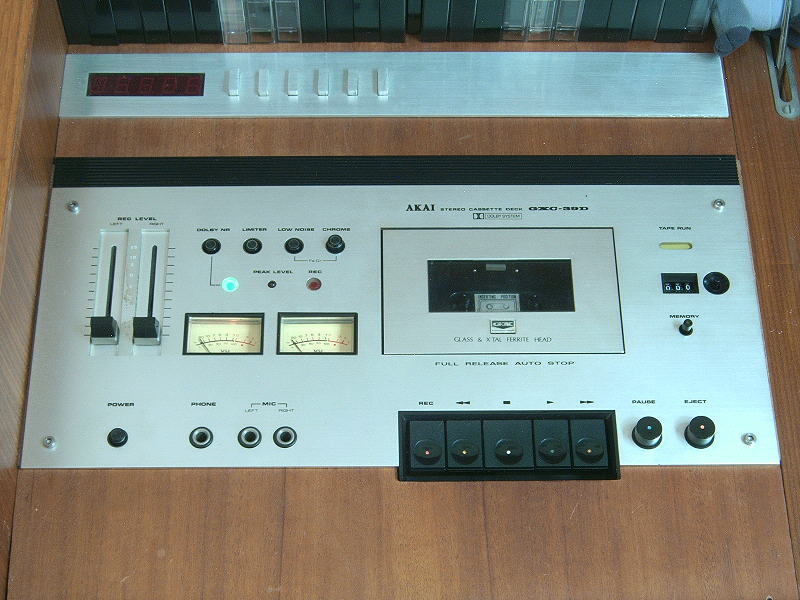
When you listen to the Innermost Thoughts tape, you hear these two elements put together -- the books I was buying at Thin's (some of the songs are just me singing Rilke or Brecht poems) and the two-track or multiple-dubbing technology. Many of these songs were recorded on a Philips N2229AV, and multiply dubbed (bounced off an Akai GXC 39) on language lab cassettes. For the podcast, I've painstakingly reassembled, re-EQed and remixed the tracks, which all come from a demos compilation I made in 1980 and titled Innermost Thoughts.
Other elements you can hear in these songs: the influence of Eno (Catalogues) and Bowie (Torments), reggae and ethnic music, combined (of course) with the kind of post-punk Peel would have been playing as the 1980s arrived; The Fall, Josef K, the Human League.
 Unlike the Human League, though, I didn't have any synths. The instruments you hear in these songs are extremely ramshackle: an acoustic guitar with a couple of strings missing (I could never bother replacing them), various cardboard boxes and an anglepoise lamp for percussion, an old upright piano which I used to open up and tamper with, my sister's clarinet (extremely badly played), a plastic metronome. Cassettes themselves (backwards and vari-sped) and short wave radio (the Radio Moscow call sign, static), were also used as instruments -- I took the Kraftwerk song about the raw sounds of radio being "electronic music" very seriously.
The humbleness of this equipment, though, is one of the songs' strengths, and one reason they sound so much more interesting and experimental than the versions I played with my band, The Happy Family, a couple of years later. The gaps in the strings on the acoustic guitar, for instance, forced me to make much more interesting arrangements. Whereas in The Happy Family I'd strum the guitar in a fairly conventional way, in these early demos I'm slackening the strings, sticking tissues under them, using a microphone as a bottle slide, tuning two strings a microtone apart, playing above the bridge, and banging the guitar for percussion. In fact, with no drum kit, I tended to treat everything as percussion, so this music is full of wonderful tuned percussion -- all manner of plinks and plonks which are somewhere between notes and beats (both, and neither). It's like ethnic music (Asian or African) made by a tribe of one.
The result is a handmade music (or, in some cases, soundscape overlaid with words, a kind of horspiel) much more experimental than anything I'd do until the 21st century. In fact, I'd say a lot of my recent records have been attempts to get back to the kind of formal eccentricity I started with, and consistently failed to find working with bands or producers. Despite the muffled and chaotic tone, this is what music sounds like in my innermost thoughts. (Recorded on something a bit better than language lab cassettes, though.)
(PS: Talking of professional-sounding records, all six of my Creation albums are now available as free mp3 downloads at Ubu.com.)
Innermost Thoughts (stereo mp3 file, 19.3MB, 47 mins)
Catalogues
Hermit & Dancer
Torments
The Spectators
K's Diary
Rum Tum Tugger
The Salesman
Solemn and Cruel
Puritans
Spartacus
Assembly
Bread
Be An Angel
My Double
Voices in the Air
Whoops, Your Voice
An Old Dog
Antigone
(Some of these are also on the Edinburgh Messthetics tape, in slightly different versions.)
In a way, this album-length collection answers the question "What happens in the parallel world where Momus, a recording artist active from the 1980s to the 2000s, is also active in the 1970s?" It's not really a parallel world, actually; I really was there in the 70s, not recording professionally for labels, but making songs at home.
There are all sorts of non-musical reasons this tape is interesting. First of all, there's the technology and the instrumentation. But before we get to that, a biographical gloss. In 1975 the Currie family came back to Scotland after a two-year stint in Montreal. The following year my dad set up The Edinburgh Language Foundation, a college dedicated to teaching groups of foreign students English. By 1979 the college was doing pretty well, with branches in Edinburgh and Haddington, a small town sixteen miles to the east. There were a couple of perks or spin-offs ELF's success gave me. For a start, I was allowed to put as many books as I wanted on the company's account at Thin's, Edinburgh's academic bookshop. I came home laden, mostly, with German literature in translation -- tomes by Brecht, Adorno, Rilke. Also, I always had weird cassette tape recorders to play with, special models with overdubbing facilities, designed for language labs (students would overdub their responses to pre-recorded lessons). And endless free cassette tapes.
When you listen to the Innermost Thoughts tape, you hear these two elements put together -- the books I was buying at Thin's (some of the songs are just me singing Rilke or Brecht poems) and the two-track or multiple-dubbing technology. Many of these songs were recorded on a Philips N2229AV, and multiply dubbed (bounced off an Akai GXC 39) on language lab cassettes. For the podcast, I've painstakingly reassembled, re-EQed and remixed the tracks, which all come from a demos compilation I made in 1980 and titled Innermost Thoughts.
Other elements you can hear in these songs: the influence of Eno (Catalogues) and Bowie (Torments), reggae and ethnic music, combined (of course) with the kind of post-punk Peel would have been playing as the 1980s arrived; The Fall, Josef K, the Human League.
Unlike the Human League, though, I didn't have any synths. The instruments you hear in these songs are extremely ramshackle: an acoustic guitar with a couple of strings missing (I could never bother replacing them), various cardboard boxes and an anglepoise lamp for percussion, an old upright piano which I used to open up and tamper with, my sister's clarinet (extremely badly played), a plastic metronome. Cassettes themselves (backwards and vari-sped) and short wave radio (the Radio Moscow call sign, static), were also used as instruments -- I took the Kraftwerk song about the raw sounds of radio being "electronic music" very seriously.The humbleness of this equipment, though, is one of the songs' strengths, and one reason they sound so much more interesting and experimental than the versions I played with my band, The Happy Family, a couple of years later. The gaps in the strings on the acoustic guitar, for instance, forced me to make much more interesting arrangements. Whereas in The Happy Family I'd strum the guitar in a fairly conventional way, in these early demos I'm slackening the strings, sticking tissues under them, using a microphone as a bottle slide, tuning two strings a microtone apart, playing above the bridge, and banging the guitar for percussion. In fact, with no drum kit, I tended to treat everything as percussion, so this music is full of wonderful tuned percussion -- all manner of plinks and plonks which are somewhere between notes and beats (both, and neither). It's like ethnic music (Asian or African) made by a tribe of one.
The result is a handmade music (or, in some cases, soundscape overlaid with words, a kind of horspiel) much more experimental than anything I'd do until the 21st century. In fact, I'd say a lot of my recent records have been attempts to get back to the kind of formal eccentricity I started with, and consistently failed to find working with bands or producers. Despite the muffled and chaotic tone, this is what music sounds like in my innermost thoughts. (Recorded on something a bit better than language lab cassettes, though.)
(PS: Talking of professional-sounding records, all six of my Creation albums are now available as free mp3 downloads at Ubu.com.)
![[identity profile]](https://www.dreamwidth.org/img/silk/identity/openid.png)
(no subject)
Date: 2009-01-22 02:50 am (UTC)(no subject)
Date: 2009-01-22 03:15 am (UTC)[Error: unknown template video]
(no subject)
Date: 2009-01-22 04:42 am (UTC)'Rum Tum Tugger', hehe, this is charming stuff,
Innermost Thoughts
Date: 2009-01-22 04:44 am (UTC)Thanks for the Ubu.com
(no subject)
Date: 2009-01-22 04:47 am (UTC)(no subject)
Date: 2009-01-22 05:03 am (UTC)(no subject)
Date: 2009-01-22 05:06 am (UTC)(no subject)
Date: 2009-01-22 05:40 am (UTC)(no subject)
Date: 2009-01-22 08:26 am (UTC)There are tracks here that remind me of Mashcat - I always assumed that aesthetic was Emi's influence, but I see it here in full in "Be An Angel"...
(no subject)
Date: 2009-01-22 08:55 am (UTC)y'know you entered the top 10 on my last.fm (http://www.last.fm/user/womanonfire/library) charts last year.
first you were the new bjork
now you're the new bach
;)
(no subject)
Date: 2009-01-22 08:57 am (UTC)(no subject)
Date: 2009-01-22 09:04 am (UTC)But it's a German accent, not a French one.
(no subject)
Date: 2009-01-22 09:21 am (UTC)(no subject)
Date: 2009-01-22 10:09 am (UTC)It's not technically even four track, these were multi-bounced two-track recorders.
For Mashcat, the sound emerged because Emi is a percussionist and brought a big pile of ethnic hand percussion to my flat in Meguro. We just put it all in, and recorded in a fairly organic, chaotic way onto a small digital recorder.
lo fi
Date: 2009-01-22 10:20 am (UTC)(no subject)
Date: 2009-01-22 10:38 am (UTC)Re: lo fi
Date: 2009-01-22 10:39 am (UTC)(no subject)
Date: 2009-01-22 10:40 am (UTC)(no subject)
Date: 2009-01-22 11:35 am (UTC)(no subject)
Date: 2009-01-22 11:42 am (UTC)aprt from a few small mechanical parts which needed changing, the thing was built like a brick and still going strong. i wonder if we will be able to say that of our current laptops and ipods in 30 years' time!
(no subject)
Date: 2009-01-22 11:44 am (UTC)admittedly I'm biased (pardon the pun) towards anything tape art related.
Thanks
Date: 2009-01-22 12:05 pm (UTC)I really like these - they remind me of the nonsense (in the best way) I was doing when I was a kid; and they're really quite inspiring. Thanks also for the free Creation downloads - I'll check them out when I've more time.
Best wishes
Simon
Time encapsulation
Date: 2009-01-22 02:15 pm (UTC)I once did much the same type of experiments using much the same type of equipment at much the same age, minus the talent, training, and technique (but with plenty of inspiration!). I think I was trying to play a rural teenage Pierre Schaeffer just stumbling about in the studio, inventing systems other decades had already abandoned--I even used this strange language lab device that consisted of playable paper cards with magnetic recording strips you'd shove through a kind of slot for quick "loops," as well as these graphite (??) disks you recorded directly onto (hard to describe).
The other day when Momus was fretting about being appreciated as a musician, I began wondering how non-English speakers might hear his music, being perhaps more able to concentrate on the "sound" of the sounds; I mean hearing it more as a kind of instrumental music. That's the way I listen to Gainsbourg: since my understanding of French could never keep up with all his wordplay, I concentrate more on the instrumentation, the arrangements, the musical inventiveness. (Whenever I hear the songs given English interpretations later I'm quite surprised to discover what they're really all about!)
Anyway, I'm just wondering if Momus ever had much experience getting criticism of his music from listeners who knew absolutely no English and hence were not hampered by troubling with the words. (But, then, how would they tell him?)
Re: Time encapsulation
Date: 2009-01-22 03:15 pm (UTC)Innermost thoughts
Date: 2009-01-22 03:40 pm (UTC)(no subject)
Date: 2009-01-22 05:07 pm (UTC)(no subject)
Date: 2009-01-22 05:09 pm (UTC)But it's real, isn't it?
Damn.
Amazing Blonde Women
Date: 2009-01-22 06:07 pm (UTC)(no subject)
Date: 2009-01-22 07:13 pm (UTC)(no subject)
Date: 2009-01-22 08:47 pm (UTC)Re: Time encapsulation
Date: 2009-01-22 09:46 pm (UTC)!
Re: Time encapsulation
Date: 2009-01-22 09:58 pm (UTC)Hmm, that's difficult. I've been told I'm big in Russia or wherever, I've been reviewed in Japanese magazines, but I think the words are always a factor in this -- they get translated, usually, or people speak English.
But the idea in the Electroacoustics of Humanism (http://imomus.com/thought201201.html) piece (and xyzedd says something similar in the penultimate paragraph there) is that a singer-soungwriter's verbal and conceptual content -- or something like it -- is also communicated texturally, if only as a guarantee of wit conveyed by the rhythm, shape and sound of wit. In other words, there's already so much in "the grain of the voice" that a good listener can join up the dots. As humans, we're very good at doing that. I do that with Brassens, for instance. And it's always possible that it's better -- wittier -- in your head than it is when you grasp every nuance of the lyric. That "guarantee" inspires confidence, and provides a space for you to project your own needs into the song, a privilege those who understand everything don't have.
(no subject)
Date: 2009-01-22 10:00 pm (UTC)Attractive
Date: 2009-01-22 11:24 pm (UTC)There was a thread on the I Love Music board about cassette labels that brought the same feeling.
cutis anserina
Date: 2009-01-22 11:58 pm (UTC)Re: Time encapsulation
Date: 2009-01-23 01:43 am (UTC)Interesting! I guess you'll just have to do the opposite of what the old ethnomusicologists did, their Edison recording devices strapped to their camels' humps--go out into the hinterlands of human existence to play your music to the inhabitants, ones who've never met a European, and take careful notes of their responses. Or else we, your fans, will have to unlearn our English.
(All day long I've been thinking I now know what I was like as a teenager: one of those villagers in that Momus song about Jean-Michel Jarre. Except I never had a guru to tutor me, and the cargo cult I built was a recreation of other worlds I could never have known. I once actually thought I was the first to invent Eno's method of the closed-loop double reel-to-reel system! No more or less than what any other reasonably inquisitive child would do with the right equipment.)
Downloaded at last, and reading the raves here, my ears are drooling...
Re: cutis anserina
Date: 2009-01-23 01:48 am (UTC)Re: cutis anserina
Date: 2009-01-23 02:57 am (UTC)Re: cutis anserina
Date: 2009-01-23 03:32 am (UTC)Re: Innermost thoughts
Date: 2009-01-23 03:57 am (UTC)(no subject)
Date: 2009-01-23 04:30 am (UTC)Percussion
Date: 2009-01-23 02:54 pm (UTC)Re truth
Date: 2009-01-24 01:46 am (UTC)Re: Re truth
Date: 2009-01-24 02:30 am (UTC)(no subject)
Date: 2009-01-24 08:13 am (UTC)(no subject)
Date: 2009-01-25 11:59 am (UTC)I am doing a project right now called Amstrad V, for I have all these old promo cassettes distributed by the Penta water company. I am taping over them with noise and sound, relabelling them.
My favorite cassette from back in the day was the Maxell 45.
(no subject)
Date: 2009-01-29 07:17 pm (UTC)(no subject)
Date: 2009-02-02 07:56 pm (UTC)